Black Widow
Her world. Her secrets. Her legacy.
- Rating
Movie Details
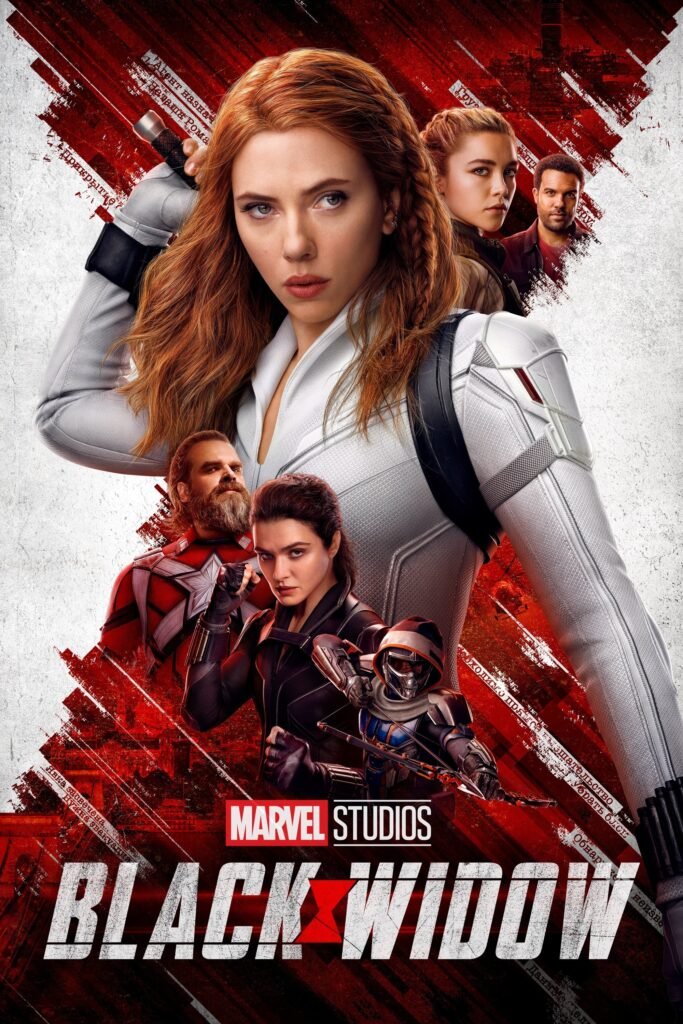
Black Widow (2021), directed by Cate Shortland, finally gives Natasha Romanoff the standalone spotlight fans had been waiting for. From the very beginning, Black Widow positions itself as more than just another superhero entry—it’s a character-driven story rooted in espionage, trauma, and identity. Within the first few moments, it’s clear that Black Widow aims to explore the emotional weight behind the action, offering a more grounded and personal narrative compared to larger ensemble films.
Set between the events of Captain America: Civil War and Avengers: Infinity War, Black Widow follows Natasha as she confronts her past while on the run. This placement in the timeline allows the story to focus on her internal struggles rather than global stakes. As a result, the film feels more intimate, even as it delivers high-energy action sequences. The focus keyword, Black Widow, is not just a title here—it represents a character wrestling with the consequences of her past decisions and the lingering effects of her upbringing.
One of the film’s biggest strengths lies in its exploration of Natasha’s history. Instead of presenting her as a fully formed hero, Black Widow peels back the layers to reveal the emotional scars left by her time in the Red Room. This organization, responsible for training and manipulating young girls into elite assassins, becomes a central part of the narrative. As Natasha reconnects with figures from her past, the story gains depth and emotional resonance.
The introduction of Yelena Belova adds a fresh dynamic to the film. Her relationship with Natasha is both playful and deeply complex, blending sibling rivalry with shared trauma. Their interactions bring a sense of authenticity to the story, grounding the film in human emotion even as it moves through explosive action set pieces. This balance between humor and seriousness keeps the pacing engaging while allowing the audience to connect with the characters on a deeper level.
Cate Shortland’s direction emphasizes character moments just as much as action. Instead of relying solely on spectacle, she creates space for quiet conversations and emotional reflection. These moments help define Black Widow as more than a traditional action film. It becomes a story about confronting the past and finding a sense of closure, even when redemption feels out of reach.
Visually, the film blends gritty realism with stylized action. The fight sequences are sharp and grounded, often relying on close-quarters combat rather than large-scale destruction. This approach reinforces Natasha’s skill set, highlighting her intelligence and precision rather than overwhelming power. Each confrontation feels deliberate, with choreography that emphasizes strategy and adaptability.
As the plot unfolds, the mission becomes clear: dismantle the Red Room and free those still under its control. This objective introduces a broader theme of liberation, not just for Natasha but for others who share her past. The film expands its scope while maintaining a personal core, ensuring that the stakes remain emotionally driven rather than purely external.
Another key element of Black Widow is its exploration of family. The concept of a “found family” plays a significant role, particularly through Natasha’s interactions with Yelena, Alexei, and Melina. While their relationships are unconventional, they provide a sense of belonging that Natasha has long been denied. These connections add warmth to the narrative, balancing the darker themes of manipulation and control.
The antagonist, Dreykov, represents the lingering influence of the Red Room. While not physically imposing, his control over the Widows creates a psychological threat that drives much of the conflict. The film leans into this idea, showing how power can manifest through manipulation rather than direct confrontation. This approach keeps the tension consistent, even in moments without action.
Taskmaster, on the other hand, introduces a more physical challenge. With the ability to mimic fighting styles, Taskmaster serves as a direct counter to Natasha’s skills. Each encounter feels like a test of adaptability, pushing Black Widow to rely on instinct and experience. These sequences add variety to the action while reinforcing the film’s focus on skill-based combat.
The pacing of the film is steady, moving between action and character development without feeling rushed. Transition moments are handled smoothly, allowing the story to flow naturally from one sequence to the next. This structure helps maintain engagement while ensuring that emotional beats are given enough time to resonate.
As the narrative builds toward its climax, the stakes become both personal and global. The destruction of the Red Room symbolizes more than just the end of an organization—it represents a break from the past. For Natasha, this moment is about reclaiming control over her own story. It’s a turning point that redefines her role within the larger universe.
What makes Black Widow stand out is its commitment to character exploration. While it delivers the action expected from a superhero film, it never loses sight of its emotional core. Natasha’s journey is not about becoming stronger but about finding peace with who she is and what she has done. This focus gives the film a sense of purpose that extends beyond its runtime.
The tone remains consistent throughout, balancing tension, humor, and introspection. Even during its most intense moments, the film maintains a sense of clarity, ensuring that the audience remains connected to the story. This balance is crucial in making Black Widow feel cohesive rather than fragmented.
By the time the story reaches its final moments, it’s clear that Black Widow has achieved something meaningful. It doesn’t just fill a gap in the timeline—it adds depth to a character who has long been part of larger narratives. The film provides context, emotion, and closure, all while delivering a compelling and entertaining experience.
Black Widow ultimately succeeds because it understands its protagonist. It respects her history, acknowledges her flaws, and gives her the space to grow. Through strong performances, thoughtful direction, and a well-paced story, the film offers a satisfying look into Natasha Romanoff’s world, proving that even in a universe filled with larger-than-life heroes, personal stories can have the greatest impact.