Scarlett Johansson, Takeshi Kitano, Pilou Asbæk, Michael Pitt, Chin Han, Juliette Binoche, Peter Ferdinando, Rila Fukushima, Daniel Henshall, Yutaka Izumihara, Anamaria Marinca, Kaori Momoi, Lasarus Ratuere, Danusia Samal, Tawanda Manyimo, Mana Hira Davis, Erroll Anderson, Kai Fung Rieck, Andrew Stehlin, Matthias Luafutu, John Luafutu, Kaori Yamamoto, Andrew Morris, Adwoa Aboah, Chris Obi, Makoto Murata, Natarsha Orsman, Joseph Naufahu, Vinnie Bennett, Pete Teo, Xavier Horan, Allan Henry, Bowie Chan Wing-Wai, Kirt Kishita, David Johnson Wood, Kate Venables, Emma Coppersmith, Tanya Drewery, Hannah Tasker-Poland, Jacqueline Lee Geurts, Shinji Ikefuji, Michael Wincott, Tricky, Philippe Joly, Yasushi Asaya, Jack Machiela, Julian Gaertner
In the near future, Major is the first of her kind: a human saved from a terrible crash, then cyber-enhanced to be a perfect soldier devoted to stopping the world's most dangerous criminals.
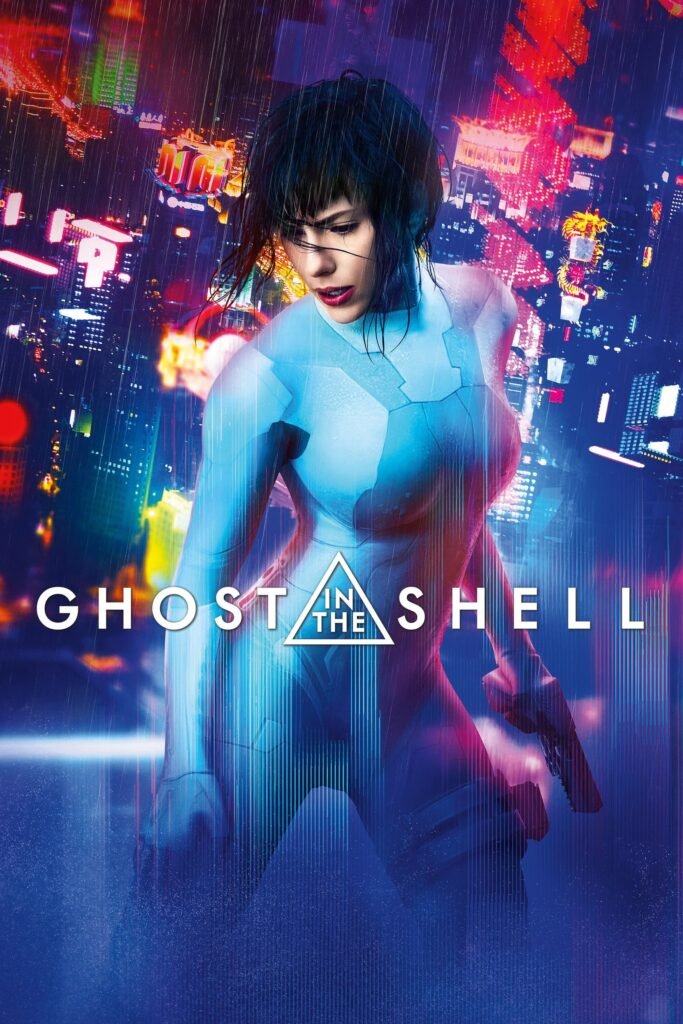
Ghost in the Shell arrived in 2017 as a live-action adaptation of one of the most influential cyberpunk franchises ever created. Directed by Rupert Sanders, the film combines futuristic visuals, philosophical themes, and high-tech action to create a stylish science-fiction experience.
Set in a world where humans and machines are deeply connected, Ghost in the Shell explores questions about identity, memory, and what it truly means to be human. While the movie delivers impressive action sequences and cybernetic technology, its emotional core focuses on a character searching for truth about her own existence.
At the center of the story is Major Mira Killian, played by Scarlett Johansson. As a cyber-enhanced soldier working for a government security division, the Major hunts dangerous cybercriminals while slowly uncovering hidden secrets about her past.
Because of its blend of philosophical storytelling and futuristic world-building, Ghost in the Shell stands apart from more traditional science-fiction action films.
A Futuristic World Filled With Technology
One of the movie’s greatest strengths is its incredible visual design. The world of Ghost in the Shell feels dense, alive, and technologically overwhelming in the best possible way.
Massive holographic advertisements tower over crowded cities, cybernetic implants are common, and human consciousness can connect directly to digital systems. The movie creates a believable cyberpunk future where technology has become inseparable from everyday life.
The urban environments immediately capture attention with neon lights, giant digital projections, and layered architecture. Every location feels packed with information and movement, helping the city itself become part of the storytelling experience.
At the same time, the technology in Ghost in the Shell serves more than just visual spectacle. The film constantly raises questions about the dangers of cybernetic enhancement and the loss of personal identity in a fully connected society.
These themes give the movie more depth than a standard futuristic action film.
Scarlett Johansson Leads the Story
Scarlett Johansson brings a calm and controlled presence to Major Mira Killian. Her performance reflects a character who appears emotionally distant on the surface while secretly struggling with confusion and uncertainty about her identity.
The Major is technically a human brain placed inside a fully cybernetic body. Because of this, she constantly questions whether her memories are real or artificially created.
This emotional conflict becomes the driving force behind the story. As the Major investigates a mysterious hacker known as Kuze, she begins uncovering disturbing truths about her own origins and the corporation responsible for her creation.
Johansson’s performance works especially well during quieter moments. Rather than relying entirely on action scenes, the movie gives the character space to reflect on isolation, memory, and personal freedom.
The supporting cast also adds strength to the film. Pilou Asbæk delivers a solid performance as Batou, the Major’s loyal partner, while Takeshi Kitano brings authority and calm intensity to Chief Aramaki.
Together, the cast helps ground the futuristic setting in emotional realism.
Action Sequences and Cyberpunk Style
Although Ghost in the Shell explores philosophical ideas, it also delivers several stylish action scenes throughout the film.
The Major’s cybernetic abilities allow for visually creative combat sequences. She can become nearly invisible using optical camouflage, enhance her strength beyond human limits, and connect directly to digital systems during investigations.
The action choreography focuses heavily on precision and speed. Fight scenes feel controlled and tactical rather than overly chaotic, which fits the movie’s futuristic tone perfectly.
Several sequences stand out visually, especially the opening attack scene and rooftop pursuits through neon-lit city streets. These moments showcase the film’s strong visual effects and attention to cyberpunk aesthetics.
The movie also recreates several iconic visuals inspired by earlier Ghost in the Shell adaptations. Fans of the franchise will recognize certain imagery and thematic callbacks integrated into the live-action version.
Meanwhile, the soundtrack enhances the atmosphere with haunting electronic music and ambient sound design that reinforce the futuristic setting.
Themes of Identity and Humanity
Beneath the action and visual effects, Ghost in the Shell spends much of its runtime exploring identity and memory.
The central question of the movie revolves around whether a person remains human once most of their body has been replaced by machinery. The Major struggles with this issue constantly as she searches for truth about herself.
As the story progresses, she realizes that her memories may have been manipulated by powerful corporations attempting to control her identity and purpose.
This theme feels especially relevant within the cyberpunk genre, where technological advancement often comes at the cost of personal freedom.
The movie also examines corporate power and surveillance. In this futuristic world, companies possess enormous influence over human bodies, memories, and information. This creates an unsettling atmosphere where privacy and individuality feel increasingly fragile.
Because of these deeper themes, Ghost in the Shell offers more than just visual spectacle. It encourages viewers to think about how technology shapes identity and human connection.
Why Ghost in the Shell Still Stands Out
Years after its release, Ghost in the Shell remains visually distinctive because of its ambitious cyberpunk world-building and philosophical storytelling.
The movie succeeds at creating an immersive futuristic setting filled with detail, atmosphere, and technological imagination. Even viewers unfamiliar with the franchise can appreciate the film’s visual creativity and emotional themes.
While opinions about the adaptation varied among longtime fans, the movie still stands as one of the most visually impressive cyberpunk films of the modern era.
Most importantly, Ghost in the Shell balances action with introspection. Beneath the futuristic weapons, digital landscapes, and cybernetic enhancements lies a story about memory, identity, and the search for humanity in a world increasingly dominated by technology.