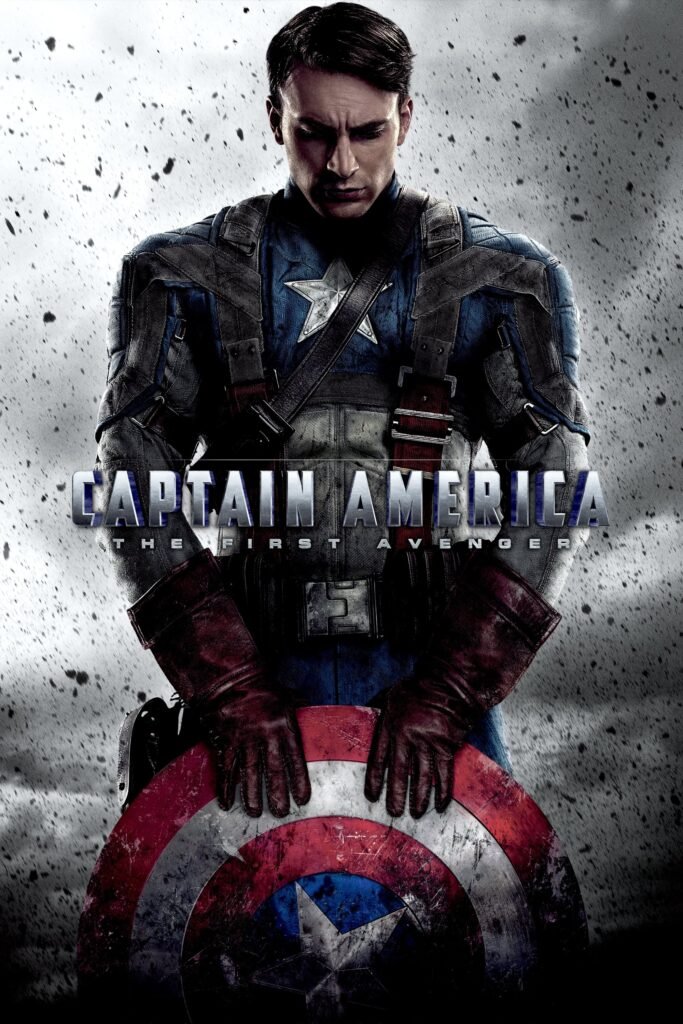
Captain America: The First Avenger
The one who never gives up awakens.
- Rating
Movie Details
Captain America: The First Avenger arrived in 2011 as one of the most important early films in the Marvel Cinematic Universe. Directed by Joe Johnston, the movie explored the origins of Steve Rogers before he became one of Marvel’s most iconic heroes. While many superhero films focus heavily on powers and destruction, this movie took a different path by blending war drama, adventure, and classic comic book storytelling.
Set during World War II, Captain America: The First Avenger introduced audiences to a version of the Marvel universe shaped by history, sacrifice, and patriotism. The film also laid the groundwork for future MCU events while giving Steve Rogers a strong emotional journey that helped him stand apart from other superheroes.
From its retro visual style to its character-driven storytelling, the movie still holds an important place within the larger Marvel franchise.
Steve Rogers Before Becoming Captain America
One of the reasons Captain America: The First Avenger works so well is because it spends time developing Steve Rogers before his transformation.
Chris Evans portrays Steve as a determined but physically weak young man who desperately wants to serve his country during the war. Despite repeated rejection from military recruitment officers, he refuses to give up because he genuinely believes helping others matters more than personal safety.
This early part of the movie is essential because it shows that Steve’s heroism exists long before he gains enhanced strength or combat abilities. His courage, empathy, and sense of justice are what make him worthy of becoming Captain America.
As a result, audiences connect emotionally with the character rather than simply admiring his powers.
A World War II Superhero Adventure
Unlike many modern superhero films set in contemporary cities, Captain America: The First Avenger embraces a World War II setting filled with military operations, secret experiments, and retro-inspired action.
The movie combines comic book elements with wartime adventure in a way that feels entertaining without losing emotional weight. From snowy battlefields to underground enemy facilities, the setting helps the film stand out visually from other Marvel entries.
The period atmosphere also gives the movie a timeless quality. Vintage costumes, vehicles, weapons, and music all contribute to the immersive experience.
At the same time, the war backdrop reinforces the themes of sacrifice and responsibility that define Steve Rogers throughout the story.
The Super Soldier Transformation
The transformation scene remains one of the movie’s most memorable moments. After being selected for a secret scientific program, Steve Rogers undergoes the Super Soldier experiment that changes him physically forever.
However, the film wisely avoids treating the transformation as the character’s defining moment. Instead, it reinforces the idea that Steve’s morality and determination are more important than his physical abilities.
Once transformed, Captain America becomes a symbol of hope and resistance during the war. Yet the movie continues showing his humanity through moments of doubt, loyalty, and emotional vulnerability.
That balance between strength and compassion is a major reason why the character became so popular within the MCU.
Red Skull as a Dangerous Villain
Every strong superhero story needs a memorable villain, and Captain America: The First Avenger delivers that with Red Skull.
Played by Hugo Weaving, Red Skull serves as the leader of HYDRA, a dangerous organization seeking advanced technology and global domination. Unlike Steve Rogers, Red Skull represents the abuse of power and the corruption caused by unchecked ambition.
The contrast between the two characters gives the story clear emotional stakes. While Captain America fights to protect people, Red Skull views humanity as weak and disposable.
Visually, the villain also stands out thanks to his intimidating appearance and commanding presence. His scenes help maintain tension throughout the movie while reinforcing the darker side of scientific experimentation.
Supporting Characters Add Emotional Depth
The supporting cast plays a huge role in making Captain America: The First Avenger feel emotionally grounded.
Hayley Atwell delivers a strong performance as Peggy Carter, a capable intelligence officer who becomes one of the film’s most important emotional anchors. Her chemistry with Steve Rogers feels natural and believable, adding warmth to the story without overshadowing the action.
Sebastian Stan also appears as Bucky Barnes, Steve’s closest friend and fellow soldier. Their friendship becomes increasingly important as the MCU continues developing future storylines.
Additionally, Tommy Lee Jones brings humor and authority to the film as Colonel Phillips, helping balance the movie’s emotional and action-heavy moments.
Action Scenes With Classic Adventure Energy
Although the movie focuses heavily on character development, the action sequences still deliver plenty of excitement.
Captain America’s combat style feels different from many modern superheroes because it emphasizes agility, tactical thinking, and shield-based combat rather than overwhelming destruction.
The action scenes also maintain a classic adventure tone inspired by older war films and pulp serials. Trains, hidden bases, motorcycle chases, and large-scale battles all contribute to the movie’s energetic pacing.
Importantly, the action never overshadows the emotional story. Every major battle connects directly to Steve’s personal growth and his mission to protect others.
Building the Marvel Cinematic Universe
Captain America: The First Avenger played a crucial role in expanding the Marvel Cinematic Universe.
The movie introduced important concepts, organizations, and technology that later became central to future MCU films. It also connected directly to larger crossover events while still functioning as a standalone origin story.
Additionally, the ending helped bridge the gap between the World War II setting and the modern-day MCU timeline. This transition prepared audiences for Captain America’s future role within the Avengers.
At the time of release, the film proved Marvel could successfully tell stories across multiple time periods without losing audience interest.
Why the Movie Still Holds Up
More than a decade later, Captain America: The First Avenger remains one of the MCU’s most heartfelt origin stories.
The movie succeeds because it focuses on character first. Steve Rogers is relatable not because he becomes powerful, but because he consistently chooses courage, kindness, and sacrifice even when facing impossible odds.
Its combination of historical adventure, emotional storytelling, and superhero action gives the film a unique identity within the Marvel franchise.
For many fans, Captain America: The First Avenger represents the beginning of one of the MCU’s strongest character arcs, establishing themes and relationships that continued shaping Marvel films for years afterward.