Spider-Man 3
The greatest battle lies within.
- Rating
Movie Details
Spider-Man 3 (2007) – A Dark Turn in the Spider-Man Saga
Spider-Man 3 is the final chapter in Sam Raimi’s original Spider-Man trilogy, released in 2007. Directed by Sam Raimi, the film expands Peter Parker’s world while pushing him into his most emotionally complex and chaotic journey yet.
Unlike the previous entries, Spider-Man 3 blends superhero action with personal drama, exploring themes of pride, revenge, forgiveness, and identity. The movie increases the scale of conflict by introducing multiple villains while also challenging Peter Parker from within.
At its core, the film is not just about fighting enemies—it is about Peter losing control of himself before learning what it truly means to be Spider-Man.
Peter Parker Under Pressure
The story of Spider-Man 3 continues with Peter Parker, played by Tobey Maguire, now balancing life as a respected hero in New York City and a committed relationship with Mary Jane Watson.
However, Peter’s life begins to unravel as fame starts to inflate his ego. Public recognition as Spider-Man shifts his personality, making him more confident but also more arrogant and emotionally distant.
This internal change becomes one of the film’s central conflicts. Peter is no longer just fighting external threats—he is also struggling with pride, jealousy, and unresolved emotional trauma.
As new enemies emerge, his personal instability becomes just as dangerous as any supervillain.
Venom and the Dark Influence
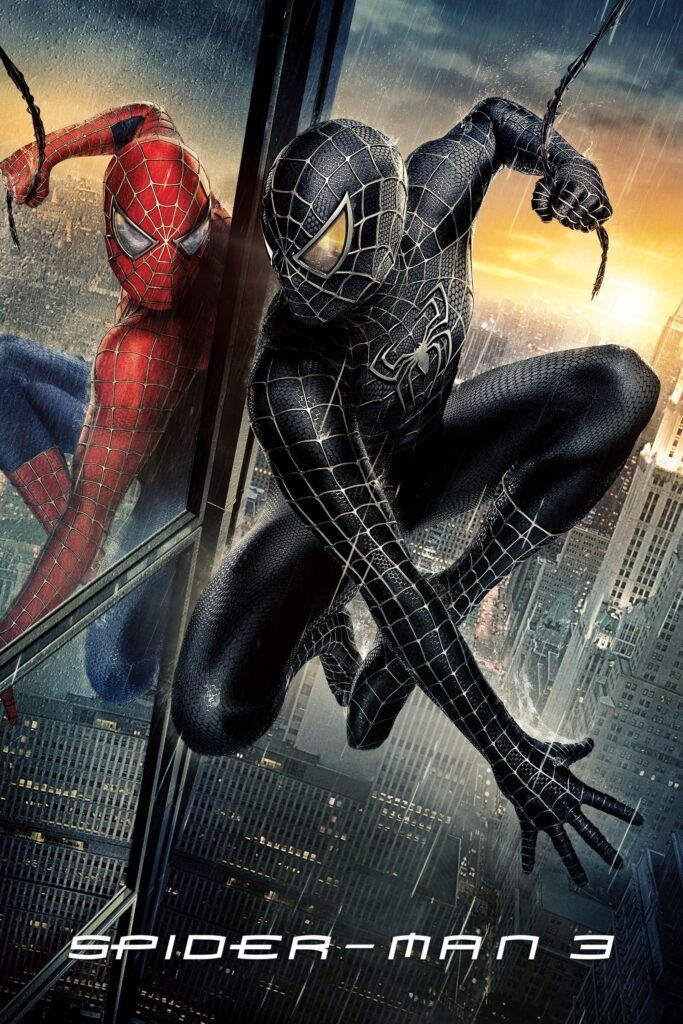
One of the most iconic elements of Spider-Man 3 is the introduction of the alien symbiote, which attaches itself to Peter Parker and transforms his behavior.
The suit enhances his powers but also amplifies his anger and ego. Under its influence, Peter becomes more aggressive and less compassionate, leading to destructive decisions that affect his relationships.
The symbiote eventually breaks away from Peter and bonds with Topher Grace’s character, Eddie Brock, creating Venom. This transformation introduces one of Spider-Man’s most dangerous and psychologically driven enemies.
Venom represents the darker side of Peter’s personality—anger, obsession, and revenge—brought to life in a separate form.
The conflict between Spider-Man and Venom becomes both physical and emotional, highlighting the consequences of losing control over inner darkness.
Sandman and a Tragic Villain Story
Another major antagonist in Spider-Man 3 is Flint Marko, also known as Sandman, played by Thomas Haden Church.
Unlike traditional villains, Sandman is portrayed with emotional depth and tragedy. His criminal actions are driven by desperation, particularly his desire to help his sick daughter.
The transformation into Sandman is accidental, caused by exposure to experimental science, turning him into a living mass of shifting sand. This ability makes him nearly impossible to defeat through conventional combat.
Peter initially sees Sandman as a cold-blooded criminal responsible for tragedy in his life. However, as the truth unfolds, Peter begins to understand the complexity of his situation.
This storyline adds emotional contrast to the darker Venom arc, showing that not all enemies are purely evil.
Harry Osborn’s Revenge Arc
A third major storyline in Spider-Man 3 focuses on Harry Osborn, played by James Franco. Harry continues his father’s legacy as the New Goblin and seeks revenge against Peter Parker, believing him responsible for Norman Osborn’s death.
Harry’s arc explores themes of friendship, betrayal, and forgiveness. His relationship with Peter shifts between hatred and emotional conflict, especially as memories of their friendship resurface.
Throughout the film, Harry struggles with the legacy of the Green Goblin while trying to define his own identity. His storyline eventually connects with the larger emotional resolution of the film.
Action, Emotion, and Dual Conflict
Spider-Man 3 increases the scale of action compared to previous films, featuring aerial battles, city-wide destruction, and intense hand-to-hand combat.
Spider-Man faces multiple enemies across different storylines, forcing him to constantly adapt his fighting style and emotional state.
However, the film is equally focused on internal conflict. Peter’s struggle with the symbiote suit becomes a metaphor for unchecked anger and ego. His transformation sequences are visually dramatic, emphasizing the shift in personality as much as physical appearance.
The movie balances large action set pieces with quieter emotional moments, particularly in Peter’s relationships with Mary Jane and Aunt May.
Sam Raimi’s Direction and Tone
Director Sam Raimi brings his signature style to Spider-Man 3, blending comic-book energy with emotional storytelling and occasional dark humor.
The film experiments with multiple storylines and tones, shifting between romance, tragedy, revenge, and superhero action. This creates a dense narrative structure with overlapping character arcs.
Visually, Raimi continues to use dynamic camera movement and expressive framing to enhance action scenes. The symbiote sequences, in particular, stand out for their psychological and visual intensity.
The soundtrack by Danny Elfman also reinforces emotional tension and heroic themes throughout the film.
Why Spider-Man 3 Remains Memorable
Even years after its release, Spider-Man 3 remains one of the most discussed entries in superhero cinema due to its ambitious storytelling and emotional complexity.
The film explores multiple villains, deep personal conflict, and moral transformation within a single narrative. While this creates a dense storyline, it also makes the movie rich in character development and thematic content.
Peter Parker’s journey through pride, darkness, and redemption remains the emotional core of the film. His struggle with the symbiote serves as a powerful metaphor for internal conflict and self-control.
With its combination of action, drama, and psychological storytelling, Spider-Man 3 stands as a bold and ambitious chapter in the Spider-Man trilogy that continues to spark discussion among fans of superhero cinema.