Blade: Trinity
The final hunt begins.
- Rating
Movie Details
Blade: Trinity (2004) and the Evolution of the Vampire Action Genre
Released in 2004 and directed by David S. Goyer, Blade: Trinity marked the third chapter in the popular vampire-hunting franchise starring Wesley Snipes. By the time the film arrived in theaters, the Blade series had already built a strong reputation for combining martial arts action, dark visuals, and supernatural horror. However, Blade: TrinityHellboy attempted to expand the formula by introducing new allies, bigger threats, and a slightly more comedic tone.
While opinions about the movie have remained divided over the years, there is no denying that Blade: Trinity played an important role in shaping early 2000s comic-inspired action films. It pushed the franchise into a larger-scale conflict while still delivering the fast-paced vampire combat fans expected.
Blade Returns for One More Fight
At the center of Blade: Trinity is Blade himself, the half-human, half-vampire warrior dedicated to wiping out bloodsuckers hiding within society. Once again, Wesley Snipes brought a cool and intimidating presence to the role. His version of Blade remained calm, dangerous, and incredibly skilled in combat.
This time, however, Blade faced one of his biggest enemies yet: Dracula, also known as Drake. The film reimagined the legendary vampire as the original and most powerful creature of his kind. That decision gave the story larger stakes and allowed the movie to lean further into supernatural mythology.
At the same time, Blade found himself targeted by both vampires and law enforcement. Because of this, the character became more isolated and forced to rely on new allies. That shift helped change the dynamic of the series and introduced a team-oriented approach that had not been fully explored in previous entries.
The Addition of the Nightstalkers
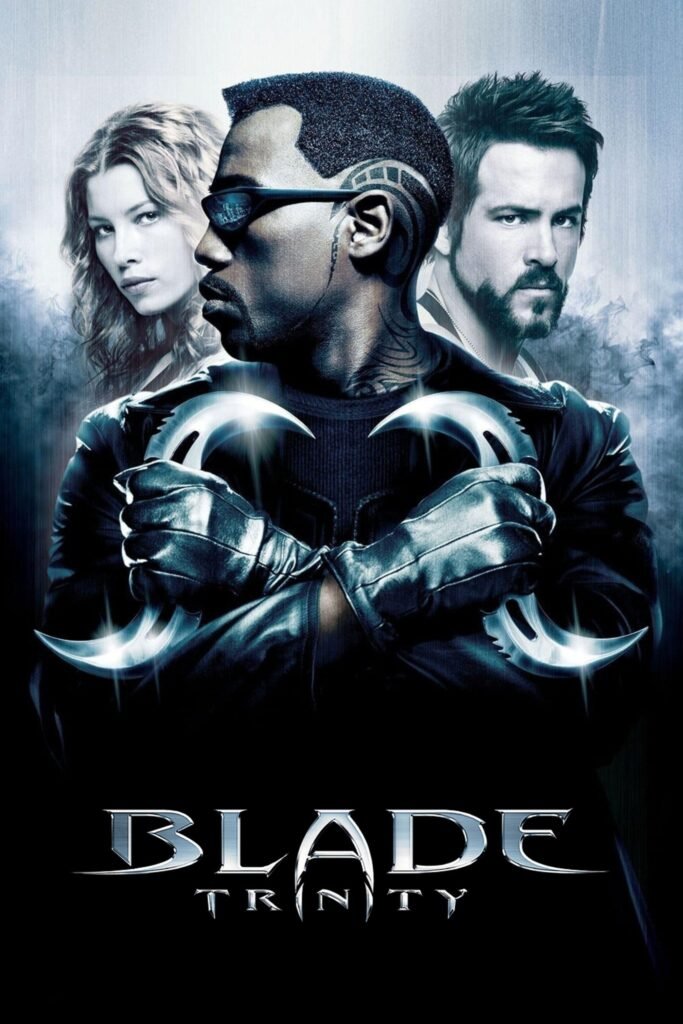
One of the most noticeable changes in Blade: TrinityHellboy was the introduction of the Nightstalkers, a group of vampire hunters working alongside Blade. The team included Hannibal King, played by Ryan Reynolds, and Abigail Whistler, portrayed by Jessica Biel.
Ryan Reynolds brought a sarcastic and humorous energy that contrasted heavily with Blade’s serious personality. Much of the film’s comedy came from the constant tension and banter between the two characters. Although the humor felt different from earlier Blade movies, it added a lighter tone that some viewers enjoyed.
Meanwhile, Jessica Biel’s Abigail introduced another skilled fighter into the action. Her athletic combat style and use of weapons helped expand the movie’s large-scale battle sequences. Together, the Nightstalkers created a more ensemble-driven story instead of focusing entirely on Blade alone.
Because of these additions, Blade: Trinity often felt closer to a team-based comic adaptation than a solo antihero film. That change gave the movie a distinct identity within the trilogy.
Action Sequences and Vampire Battles
Even though the tone shifted slightly, Blade: Trinity still delivered the intense action the franchise was known for. The movie featured martial arts fights, sword combat, gun battles, and brutal vampire encounters throughout its runtime.
Director David S. Goyer kept the pacing quick, ensuring there was rarely a dull moment. From nightclub confrontations to large-scale vampire hunts, the film maintained a strong action focus from beginning to end.
The visual style also continued the dark and stylish atmosphere established in earlier entries. Urban settings, underground vampire hideouts, and shadowy environments helped preserve the franchise’s signature look. Although some CGI effects reflected the era in which the movie was made, the practical stunt work and choreography still hold attention today.
One standout element was the film’s version of Dracula. Instead of portraying him as a traditional gothic villain, the movie transformed him into a physically dominant warrior with enhanced powers. That modern interpretation gave Blade a more intimidating opponent than many expected.
A Different Tone Compared to Earlier Films
Fans often debate how Blade: Trinity compares to the first two movies. One major reason is the film’s tone. While earlier entries leaned heavily into horror and gritty action, this third installment introduced more jokes and a lighter atmosphere.
For some viewers, the humor helped make the movie more entertaining and accessible. Ryan Reynolds, in particular, brought constant energy and comedic timing that stood out in many scenes. However, other fans preferred the darker style of the earlier films and felt the tonal shift weakened the overall atmosphere.
Even so, the movie still retained several important elements that defined the franchise. Blade remained a powerful and intimidating character, the vampire mythology continued to expand, and the action sequences stayed aggressive and stylish.
Because of this balance, Blade: Trinity developed a reputation as a fun but imperfect conclusion to the trilogy.
The Legacy of Blade: Trinity
Although Blade: TrinityHellboy received mixed reactions upon release, its influence on comic book action movies remains interesting to examine. The Blade series as a whole helped prove that darker comic-inspired stories could succeed on the big screen long before the genre completely dominated theaters.
The trilogy also introduced audiences to a more mature and violent style of superhero storytelling. Unlike many comic adaptations of the early 2000s, Blade embraced horror, intense combat, and supernatural mythology without holding back.
Over time, many fans revisited Blade: Trinity and found enjoyment in its fast pace, energetic cast, and over-the-top action. While it may not have reached the same critical praise as Blade II, the movie still delivered memorable moments and expanded the franchise’s world in new ways.
Additionally, the performances from actors like Ryan Reynolds and Jessica Biel gave the film a distinct personality that separated it from the previous chapters.
A Fast-Paced Finish to the Trilogy
Looking back, Blade: Trinity remains an interesting entry in early comic book cinema. It combined vampire horror, martial arts action, and sarcastic humor into a unique mix that reflected the evolving style of mid-2000s action movies.
Director David S. Goyer attempted to expand the franchise while still preserving the core appeal that made Blade popular in the first place. Even though reactions to the movie continue to vary, the film still offers entertaining action, memorable characters, and a darker comic-inspired atmosphere that stands apart from many other releases of its era.
For longtime fans of vampire action movies, Blade: Trinity remains an energetic conclusion to one of the genre’s most influential trilogies.