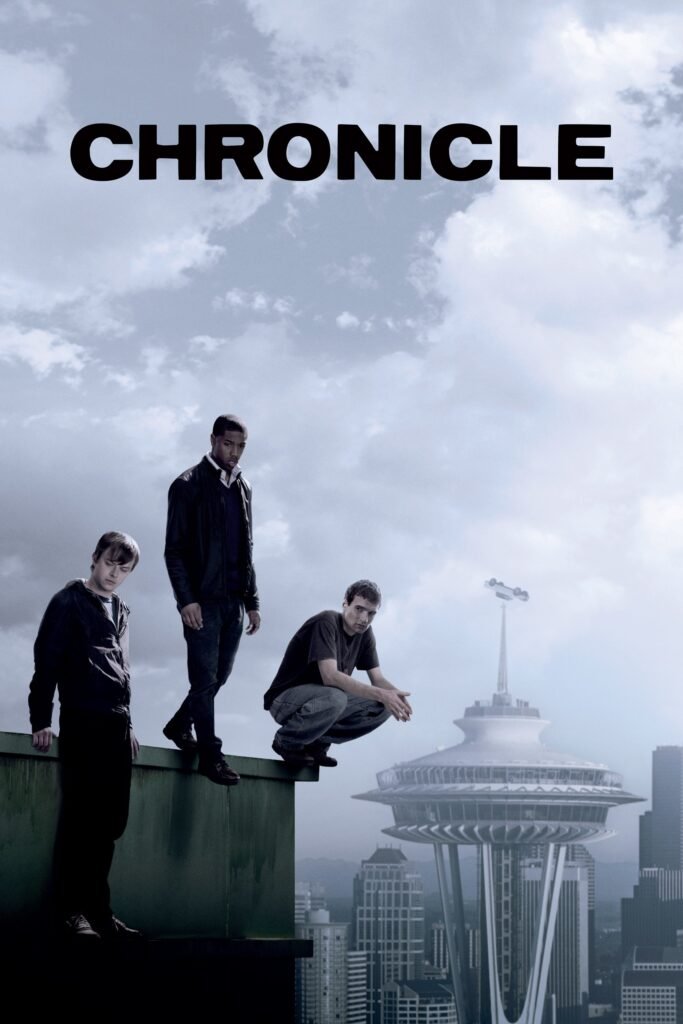
Chronicle
What are you capable of?
- Rating
Movie Details
A Different Kind of Superhero Story
Chronicle is a 2012 science fiction thriller that takes a very different approach to the superhero genre by presenting the story through a found-footage style. Directed by Josh Trank, the film focuses on three teenagers who suddenly gain extraordinary telekinetic abilities after discovering a mysterious underground object.
From the beginning, Chronicle sets itself apart from traditional superhero movies by grounding its story in realism and emotional instability rather than heroism. The narrative is presented mostly through handheld cameras, security footage, and personal recordings, making the experience feel immediate and personal.
The focus keyword Chronicle naturally reflects the film’s structure, which documents the gradual transformation of ordinary teenagers into individuals with godlike powers.
The Discovery That Changes Everything
The story begins when Andrew Detmer, a socially isolated teenager dealing with a troubled home life, begins recording his daily experiences with a video camera. His cousin Matt and popular classmate Steve later discover a strange underground structure containing a glowing crystalline object.
After this encounter, the three teenagers develop telekinetic abilities that allow them to move objects with their minds. At first, they treat these powers like a game, experimenting with what they can do and exploring their new capabilities without understanding the consequences.
This early phase of discovery creates a sense of wonder and excitement. However, as their powers grow stronger, the tone of the story begins to shift.
Power Without Control
One of the central themes of Chronicle is what happens when power is given without responsibility or emotional maturity. While Steve embraces the abilities as a way to have fun and impress others, Andrew begins to struggle with deeper emotional issues that intensify over time.
Matt serves as a more cautious influence, attempting to set boundaries and encourage restraint. However, the imbalance between the three characters becomes increasingly unstable as their abilities evolve.
As their telekinetic powers grow stronger, everyday situations begin to escalate into dangerous and uncontrollable events. What starts as playful experimentation gradually turns into serious consequences.
The film uses this progression to show how power can amplify existing personality traits rather than change them completely.
Josh Trank’s Direction and Found-Footage Style
The direction by Josh Trank plays a major role in shaping the identity of Chronicle. The found-footage format allows the audience to experience events through the characters’ perspectives, making the story feel raw and immediate.
Instead of traditional cinematic framing, the film uses handheld cameras, phone recordings, and environmental surveillance to build its narrative. This approach creates a sense of realism and unpredictability, especially during scenes involving telekinetic destruction.
The visual style also emphasizes emotional intensity. Camera movement becomes chaotic during moments of conflict, reflecting the instability of the characters’ mental and emotional states.
At the same time, quieter scenes feel intimate and personal, giving viewers insight into the characters’ private struggles.
The Descent Into Chaos
As the story progresses, Chronicle shifts from a coming-of-age drama into a darker psychological thriller. Andrew, in particular, begins to lose control over both his emotions and his abilities.
His growing anger and isolation lead to increasingly destructive behavior, turning the film’s tone from curiosity to tension and eventually to tragedy. The powers that once felt exciting become dangerous tools that reflect internal pain and instability.
Steve and Matt attempt to intervene, but their efforts are not enough to prevent escalation. The conflict between the three friends becomes the emotional core of the film, highlighting how relationships can break down under pressure.
This gradual shift in tone is one of the most effective aspects of Chronicle, as it mirrors the characters’ transformation from teenagers into unstable individuals dealing with immense power.
Themes of Isolation and Emotional Trauma
Chronicle explores several psychological themes, particularly isolation, trauma, and the impact of emotional neglect. Andrew’s home life plays a significant role in shaping his behavior throughout the film.
His experiences with bullying, family conflict, and loneliness contribute to his inability to cope with his new abilities in a healthy way. Instead of finding empowerment, he becomes more disconnected from those around him.
The film suggests that power alone does not solve emotional problems and can, in fact, intensify them when left unchecked.
Another important theme is friendship. The bond between Andrew, Matt, and Steve initially provides stability, but it slowly deteriorates as their perspectives on power diverge.
Action and Telekinetic Combat
The action in Chronicle is unique compared to traditional superhero films. Instead of physical combat or choreographed fight scenes, the movie focuses on telekinetic force being used in unpredictable and destructive ways.
Objects fly through the air, environments collapse, and characters are thrown across spaces without warning. Because the powers are not fully controlled, every confrontation feels chaotic and dangerous.
The found-footage style enhances this unpredictability, making the action feel raw and immersive. The audience never fully knows what will happen next, which increases tension throughout the film.
These sequences emphasize that power without control leads to destruction rather than heroism.
Transformation and Consequences
One of the most important aspects of Chronicle is its focus on transformation. Each character changes in different ways depending on how they respond to their new abilities.
Andrew’s transformation is the most dramatic, shifting from a quiet, troubled teenager into someone overwhelmed by emotion and power. Steve embraces his abilities more confidently, while Matt tries to maintain balance and morality.
These contrasting paths highlight the film’s central question: how do people change when given abilities beyond human limits?
The consequences of their choices become increasingly severe as the story reaches its climax.
Impact and Legacy
Chronicle became notable for its fresh take on the superhero concept and its grounded, psychological approach to storytelling. Rather than focusing on heroism in the traditional sense, the film explores how ordinary individuals might react when given extraordinary power.
Its found-footage style and emotional focus helped distinguish it from other superhero films released around the same time. Over the years, Chronicle has remained a reference point for grounded superhero storytelling and character-driven sci-fi narratives.