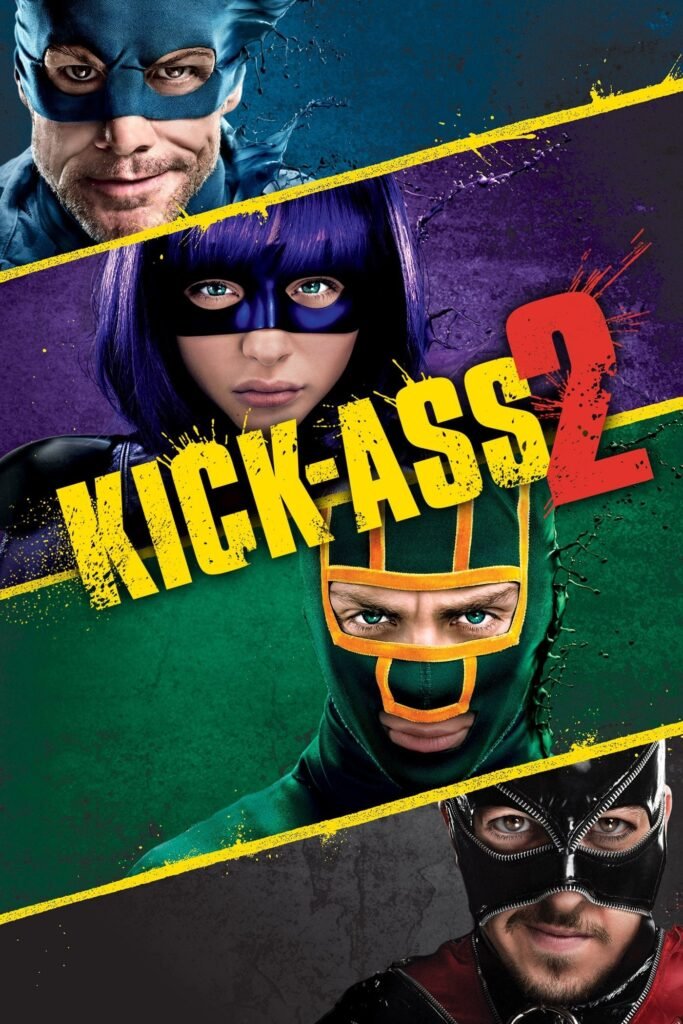
Kick-Ass 2
You Can't Fight Your Destiny.
- Rating
Movie Details
A Darker Return to Vigilante Justice
Kick-Ass 2 is a 2013 superhero black comedy action film that continues the story of ordinary people taking justice into their own hands. Directed by Jeff Wadlow, the movie builds on the chaotic world introduced in the first installment, pushing its characters into more dangerous and emotionally complex situations.
From the beginning, Kick-Ass 2 explores what happens when amateur superheroes try to operate in a world that does not take them seriously. Unlike traditional superhero films, this story focuses on realism, consequences, and the blurred line between heroism and recklessness.
The focus keyword Kick-Ass 2 naturally represents this evolution, as the characters must face the real cost of their actions while continuing to fight crime in their own unconventional way.
Rise of the Vigilantes
After the events of the first film, more individuals are inspired to become masked vigilantes. Some join forces to fight crime, while others struggle with the psychological and physical dangers of this lifestyle.
Dave Lizewski, also known as Kick-Ass, continues his journey as a costumed hero, training to improve his combat abilities and working alongside other vigilantes. However, he quickly realizes that being a hero in real life is far more dangerous than he originally imagined.
The world of Kick-Ass 2 is filled with both aspiring heroes and violent criminals, creating a constant tension between justice and chaos. Every action has consequences, and mistakes can be deadly.
The Rise of a Dangerous Enemy
One of the central conflicts in Kick-Ass 2 comes from the emergence of a new antagonist leading a group of criminals who challenge the vigilante movement. This villain represents a more organized and brutal form of crime, raising the stakes significantly for the heroes.
As the conflict escalates, both sides begin to suffer losses, forcing the vigilantes to confront their limitations. The line between hero and criminal becomes increasingly blurred as violence intensifies.
This shift in tone makes Kick-Ass 2 darker than its predecessor, focusing more on consequences and moral ambiguity rather than pure comedic action.
Publisher and Universe Context
Kick-Ass 2 is based on the comic book series created by Mark Millar and John Romita Jr. The film is produced within the broader adaptation of the Kick-Ass universe, which exists outside traditional superhero franchises.
The movie continues the story of masked vigilantes in a grounded, realistic setting rather than a traditional comic book superhero universe. This allows the story to explore violence, justice, and identity in a more raw and unfiltered way.
Unlike larger interconnected superhero worlds, Kick-Ass 2 remains focused on its own self-contained narrative and characters.
Training, Teamwork, and Costumed Heroes
A major part of Kick-Ass 2 revolves around the formation of a group of costumed heroes. These individuals attempt to organize themselves into a functioning team, learning how to work together despite their lack of formal training.
The group dynamic introduces both humor and tension. Some members take their roles seriously, while others struggle with fear, confidence, or lack of experience.
Training sequences highlight the physical and emotional challenges of becoming a vigilante. Unlike traditional superheroes, these characters do not have superpowers, making every fight dangerous and unpredictable.
This grounded approach adds realism to the action and emphasizes the vulnerability of each character.
Jeff Wadlow’s Direction and Style
The direction by Jeff Wadlow brings a mix of stylized action and emotional storytelling. The film balances dark humor with violent action sequences, creating a tone that shifts between intense and reflective moments.
Visually, the movie uses a gritty urban aesthetic to reflect the harsh reality of vigilante life. Fight scenes are often brutal and fast-paced, highlighting the lack of protection and training among the characters.
Dialogue also plays an important role, blending comedic moments with emotional conflict. This combination helps maintain the film’s unique identity within the superhero genre.
Themes of Consequences and Identity
One of the strongest themes in Kick-Ass 2 is consequence. Every action taken by the vigilantes leads to real-world outcomes, often resulting in injury, loss, or emotional trauma.
Another important theme is identity. Characters constantly question who they are when they wear masks. Some embrace their alter egos fully, while others struggle to separate their normal lives from their vigilante activities.
The film also explores morality in a grounded way. Instead of clear heroes and villains, many characters operate in gray areas where motivation and action often conflict.
Action and Brutality
The action in Kick-Ass 2 is significantly more intense than in typical superhero films. Fights are raw, physical, and often unforgiving. Without superpowers, characters rely on weapons, training, and strategy to survive confrontations.
This creates a sense of vulnerability that runs throughout the film. Injuries and consequences are permanent, reinforcing the idea that real-life heroism comes at a cost.
The choreography focuses on realism and impact rather than stylized fantasy, making each confrontation feel more dangerous and unpredictable.
Impact and Legacy
Kick-Ass 2 remains a notable entry in the superhero genre because of its grounded approach to vigilante storytelling. It challenges traditional superhero expectations by showing what happens when ordinary people attempt to become heroes without extraordinary abilities.
While its tone and content sparked discussion among audiences, the film continues to stand out for its willingness to explore darker themes and realistic consequences.
Over time, Kick-Ass 2 has maintained a cult following among fans who appreciate its unconventional take on superhero storytelling.