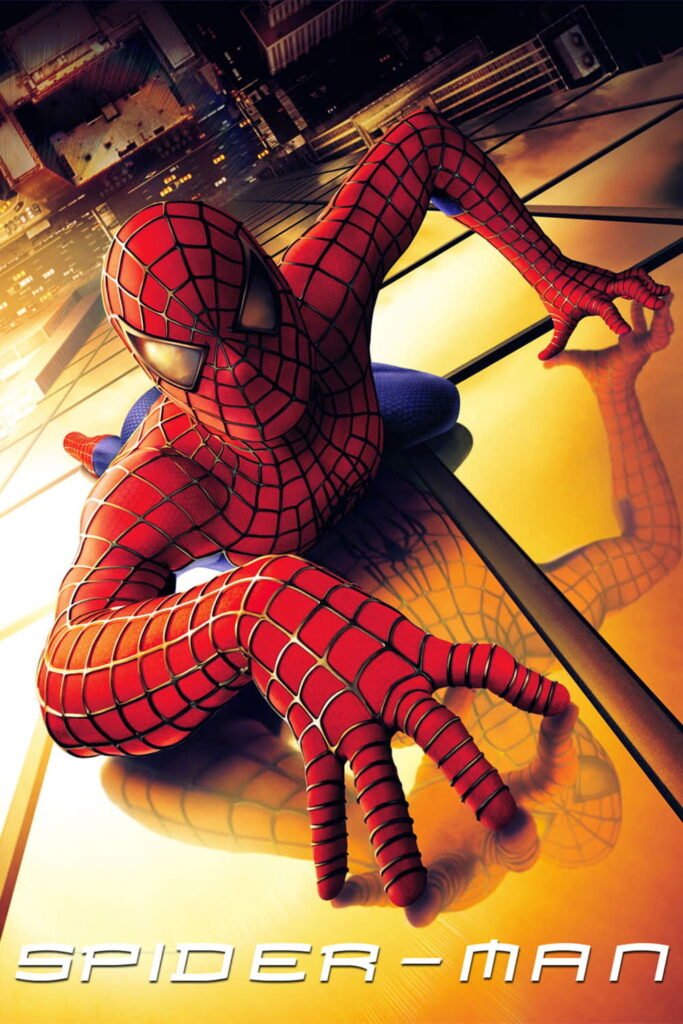
Spider-Man
Go for the ultimate spin.
- Rating
Movie Details
Spider-Man (2002) – The Web-Slinging Origin That Changed Superhero Movies
Spider-Man (2002) arrives as a defining moment for modern superhero cinema, and right from the opening scenes, Spider-Man establishes itself as more than just an action film—it’s a character-driven origin story with emotional weight and grounded stakes. Directed by Sam Raimi, the film brings Peter Parker’s transformation into a superhero to life in a way that feels both relatable and larger than life.
As the story begins, Peter Parker is introduced as an ordinary high school student dealing with everyday struggles. He is shy, intelligent, and often overlooked, which makes his journey even more impactful once his life changes dramatically. That contrast between his normal life and his eventual transformation becomes the foundation of the entire film.
Because of this setup, the story immediately connects with audiences on a personal level before expanding into something much bigger.
The Moment Everything Changes
The turning point in Spider-Man (2002) comes when Peter is bitten by a genetically modified spider during a school field trip. At first, the changes seem subtle—heightened senses, increased strength, and faster reflexes—but they quickly escalate into something far more significant.
As Peter begins to understand his new abilities, he initially uses them for personal gain. This phase of experimentation highlights his immaturity and curiosity, but it also sets the stage for a major lesson that will define his journey.
However, everything changes after a tragic event forces him to confront the consequences of his actions. This moment becomes the emotional core of the film, shifting Peter’s perspective entirely.
Because of this turning point, the story evolves from a personal fantasy into a responsibility-driven mission.
Becoming Spider-Man
Once Peter fully embraces his new identity, Spider-Man becomes more than just a costume—it becomes a symbol of responsibility. The phrase “with great power comes great responsibility” becomes the guiding principle of his transformation.
At this stage, Peter’s journey becomes about sacrifice. He must balance his personal life, relationships, and new responsibilities as a hero. This balancing act creates ongoing tension throughout the film.
As Spider-Man, he begins to protect the city from emerging threats, but his choices often come at a personal cost. Friends and family notice the changes in his behavior, adding emotional complexity to his double life.
Because of this, the film constantly shifts between action sequences and personal drama, keeping the story grounded.
A Villain Born From Science
A major force in Spider-Man (2002) is the antagonist, who emerges from scientific experimentation gone wrong. This character represents the darker side of ambition and technological advancement, creating a direct contrast to Peter’s own journey.
Where Peter gains abilities and chooses responsibility, the villain is consumed by power and ego. This contrast creates a thematic balance between heroism and corruption.
As the conflict develops, their personal connection becomes more important, raising the emotional stakes of their encounters. It’s not just a battle of strength—it’s a battle of ideals.
Because of this dynamic, their confrontations carry both physical and emotional weight.
Action That Feels Grounded and Personal
The action in Spider-Man (2002) is designed to reflect the character’s abilities in a realistic yet stylized way. Swinging through New York City becomes a defining visual element, capturing the freedom and agility of the character.
Fight sequences are tightly choreographed, often emphasizing close-quarters combat and environmental interaction. Instead of relying solely on large-scale destruction, the film focuses on personal encounters between characters.
This approach helps keep the action grounded in Peter’s perspective, making every fight feel connected to his growth.
At the same time, the pacing ensures that action never overshadows character development.
The Dual Life of Peter Parker
One of the strongest elements of Spider-Man (2002) is its exploration of dual identity. Peter Parker must constantly navigate between his personal life and his responsibilities as Spider-Man.
This creates ongoing tension, especially as relationships become strained. Friends and loved ones notice his absences and behavior changes, leading to emotional conflict.
As a result, Peter often finds himself torn between two worlds. Every decision carries consequences, and balancing both identities becomes increasingly difficult.
Because of this, the film maintains a strong emotional core even during its most action-heavy moments.
Visual Style and Early 2000s Energy
Visually, Spider-Man (2002) carries a distinct early 2000s cinematic style. The effects, costume design, and cityscapes combine practical filmmaking with emerging digital techniques.
The web-swinging sequences, in particular, stand out as ambitious for their time. They capture the sensation of movement through a dense urban environment, helping audiences feel immersed in Spider-Man’s perspective.
Lighting and color choices also play a role in defining tone, with brighter scenes reflecting hope and darker scenes emphasizing conflict.
Because of this visual balance, the film maintains a consistent identity throughout.
Emotional Stakes at the Center
Beyond the action and visual spectacle, Spider-Man (2002) is ultimately about responsibility and growth. Peter’s journey is shaped by loss, choice, and consequence, all of which define his transformation into a hero.
The emotional weight of his decisions adds depth to the story, making his victories and failures equally meaningful.
At the same time, the film explores how power can affect relationships and personal identity. Peter must learn that being a hero comes with sacrifices that cannot be avoided.
This emotional grounding is what elevates the film beyond a typical action story.
A Hero Defined by Choice
What makes Spider-Man (2002) stand out is its focus on choice. Peter is not destined to become a hero—he chooses to become one after understanding the consequences of inaction.
This idea reinforces the central theme of responsibility. Every action he takes shapes the world around him, and every mistake carries weight.
Because of this, the story remains deeply personal, even as the stakes grow larger.
A Defining Superhero Origin Story
Spider-Man (2002) succeeds because it balances spectacle with emotional storytelling. It introduces audiences to a relatable hero while gradually building him into a symbol of responsibility.
The combination of character development, action, and thematic depth creates a complete origin story that resonates beyond its runtime.
In the end, it remains a landmark film that helped define how superhero stories could be told on the big screen, blending human emotion with larger-than-life adventure in a way that still holds up today.