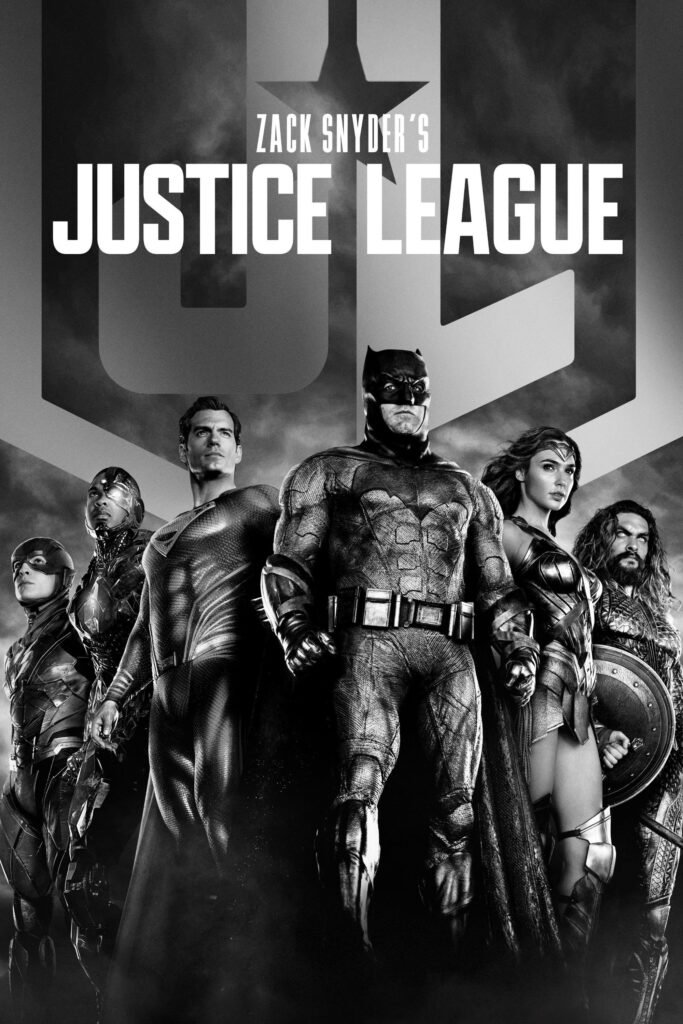
Zack Snyder’s Justice League
Us united.
- Rating
Movie Details
Zack Snyder’s Justice League (2021), directed by Zack Snyder, is more than just a director’s cut—it’s a complete reimagining of a story that finally feels whole. Right from the beginning, Zack Snyder’s Justice League establishes a darker, more deliberate tone that sets it apart from its theatrical counterpart. The pacing, the character arcs, and the visual storytelling all come together to create a film that feels cohesive and purposeful.
The story begins in the aftermath of a world-shaking loss, where Earth is left vulnerable to powerful external threats. This sense of instability drives the narrative forward, giving the film an immediate sense of urgency. Instead of rushing into action, Zack Snyder’s Justice League takes its time building the world and reintroducing its characters. This slower approach allows each moment to carry more weight, making the stakes feel real rather than manufactured.
One of the most noticeable improvements is how the characters are handled. Each member of the team is given a proper introduction and a meaningful arc. Bruce Wayne takes on the role of a determined leader, seeking redemption by bringing together a group capable of protecting the planet. Diana Prince provides wisdom and strength, while characters like Aquaman, Flash, and Cyborg are given space to develop in ways that feel natural and engaging.
Cyborg, in particular, becomes a central figure in Zack Snyder’s Justice League. His story is no longer sidelined but instead forms the emotional core of the film. His struggle with identity, loss, and acceptance adds depth to the narrative, transforming him from a supporting character into a key player. This focus on character development is one of the reasons the film feels so much more complete.
The film’s structure is divided into chapters, which helps organize its extended runtime. Rather than feeling overwhelming, this format allows the story to unfold gradually. Each chapter builds on the last, creating a steady progression that keeps viewers invested. Transition moments between scenes are handled smoothly, ensuring that the narrative flows without feeling disjointed.
Visually, Zack Snyder’s Justice League embraces a bold and consistent style. The darker color palette, combined with dramatic lighting and slow-motion sequences, creates a cinematic experience that feels almost mythological. Every frame appears carefully crafted, reinforcing the idea that this is not just a superhero film but an epic story about gods, heroes, and destiny.
The action sequences are another highlight. They are larger in scale and more impactful, giving each confrontation a sense of importance. Instead of quick, fragmented battles, the film presents extended sequences that allow the audience to fully absorb the intensity of each moment. These scenes are not just about spectacle—they are tied directly to character development and story progression.
The antagonist is also given more depth in Zack Snyder’s Justice League. Steppenwolf is no longer a one-dimensional villain but a character driven by purpose and desperation. His connection to Darkseid adds another layer to the story, hinting at a much larger universe beyond what is immediately shown. This expanded mythology enriches the narrative, making the conflict feel part of something bigger.
Another key strength of the film is its emotional resonance. Moments of loss, hope, and determination are given the time they need to breathe. The relationships between characters are explored in a way that feels genuine, allowing the audience to connect with them on a deeper level. This emotional grounding balances the larger-than-life elements, making the story more relatable.
As the team comes together, the film shifts into a more unified narrative. Each character brings their own strengths and perspectives, creating a dynamic that feels both balanced and engaging. The sense of teamwork is earned rather than forced, making their eventual collaboration feel satisfying.
The climax of Zack Snyder’s Justice League is where everything comes together. The final battle is a multi-layered sequence that combines action, strategy, and emotion. Each member of the team plays a crucial role, contributing to the overall outcome in a way that highlights their individual growth. The stakes are high, and the execution ensures that every moment feels significant.
What sets Zack Snyder’s Justice League apart is its commitment to vision. It doesn’t try to conform to expectations or follow a conventional formula. Instead, it embraces its unique style and tone, delivering a film that feels distinct within the superhero genre. This confidence is evident in every aspect, from storytelling to visual design.
The extended runtime may seem daunting at first, but it ultimately works in the film’s favor. It allows for a more detailed exploration of characters and themes, creating a richer and more immersive experience. Rather than feeling like an obligation, the length becomes an asset that enhances the story.
By the time the film reaches its final moments, it’s clear that Zack Snyder’s Justice League has achieved something rare. It transforms a previously fragmented narrative into a cohesive and compelling story. The characters are more defined, the stakes are more impactful, and the overall experience is far more satisfying.
Zack Snyder’s Justice League stands as a testament to the importance of creative vision. It shows what can happen when a story is given the time and space it needs to fully develop. With its strong character arcs, striking visuals, and emotionally driven narrative, the film leaves a lasting impression that resonates long after the credits roll.