Batman Returns
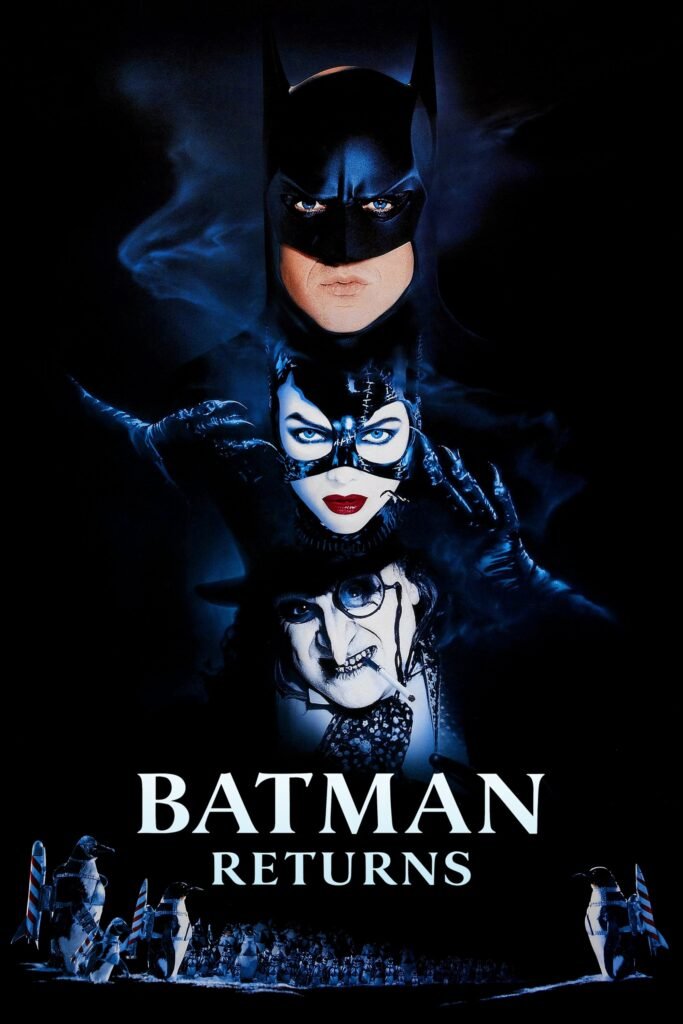
The Bat. The Cat. The Penguin.
- Rating
Movie Details
When Batman Returns hit theaters in 1992, audiences were already familiar with the brighter, heroic tone often associated with Superman. However, director Tim Burton chose a very different path. Instead of following a traditional superhero formula, Batman Returns dives deeper into gothic storytelling, psychological complexity, and visual artistry. As a result, the film stands out as one of the most distinctive—and divisive—entries in superhero cinema.
A Sequel That Embraces Darkness
From its opening scenes, Batman Returns establishes a tone that is far darker than its predecessor. Set during the winter season, Gotham City is covered in snow, giving the film a cold and haunting atmosphere. This visual choice is not merely aesthetic; it reinforces the emotional isolation of its characters.
Moreover, while Superman often represents optimism and moral clarity, Batman Returns explores ambiguity and internal conflict. The story focuses less on traditional heroism and more on the blurred lines between good and evil. Consequently, viewers are invited to question the nature of its characters rather than simply root for them.
Michael Keaton’s Evolving Batman
Michael Keaton reprises his role as Bruce Wayne, bringing a quieter and more introspective performance. In this sequel, Batman feels even more detached from the world around him. His presence is less about public heroism and more about personal struggle.
Additionally, Keaton’s portrayal emphasizes the duality of the character. While Superman is often seen as a symbol of hope embraced by society, Batman remains a shadowy figure operating on the fringes. This contrast highlights the film’s central theme: the idea that heroism can take many forms, not all of them comforting.
Iconic Villains: Penguin and Catwoman
One of the defining strengths of Batman Returns lies in its villains. Danny DeVito’s Penguin is grotesque, tragic, and strangely sympathetic. His backstory, which begins with abandonment and rejection, adds emotional depth to what could have been a purely antagonistic role.
Meanwhile, Michelle Pfeiffer’s Catwoman delivers one of the most memorable performances in superhero film history. Her transformation from a timid secretary into a confident and unpredictable antihero is both compelling and unsettling.
Furthermore, both characters serve as mirrors to Bruce Wayne. Like Batman, they exist outside societal norms, struggling with identity and acceptance. This thematic connection adds layers to the narrative, making it far more complex than a standard good-versus-evil story.
Tim Burton’s Distinct Visual Style
Visually, Batman Returns is unmistakably a Tim Burton film. Gothic architecture, exaggerated set designs, and surreal imagery dominate every frame. Gotham City feels less like a real place and more like a dark fairy tale brought to life.
In contrast to the bright, open landscapes often associated with Superman, Burton’s Gotham is confined and oppressive. This stylistic choice enhances the film’s emotional tone, creating a world where danger and mystery are ever-present.
Additionally, the use of practical effects and detailed production design contributes to the film’s timeless quality. Even decades later, its visuals remain striking and unique.
Danny Elfman’s Atmospheric Score
Complementing the film’s visual identity is Danny Elfman’s haunting musical score. Building on his work from the first film, Elfman introduces new themes that reflect the darker tone of the sequel.
The music plays a crucial role in shaping the film’s atmosphere. Whether it’s the tragic undertones associated with Penguin or the seductive, unpredictable melodies tied to Catwoman, the score enhances the emotional depth of each character.
Moreover, the contrast between Elfman’s gothic compositions and the more triumphant style often linked to Superman further underscores the film’s departure from traditional superhero storytelling.
Themes of Isolation and Identity
At its core, Batman Returns is a story about outsiders. Each of the main characters—Batman, Penguin, and Catwoman—struggles with a sense of belonging. This shared theme creates a narrative that is as introspective as it is dramatic.
For instance, Bruce Wayne’s inability to fully integrate into society mirrors Penguin’s rejection and Catwoman’s transformation. These parallels give the film a cohesive emotional thread that runs throughout the story.
Additionally, the film explores how society reacts to those who are different. While Superman is often celebrated as a hero, the characters in Batman Returns are feared, misunderstood, or exploited. This contrast adds a layer of social commentary that elevates the film beyond simple entertainment.
A Bold Yet Divisive Legacy
Upon its release, Batman Returns received mixed reactions. While many praised its artistic ambition and performances, others found its dark tone and unconventional storytelling surprising for a mainstream superhero film.
However, over time, the film has gained a strong following. It is now widely regarded as a cult classic that pushed the boundaries of what superhero films could achieve.
Furthermore, its influence can be seen in later adaptations that embrace darker themes and more complex characters. In this way, Batman Returns helped expand the possibilities of the genre, much like Superman did in its own era.
Final Thoughts
Batman Returns (1992) remains one of the most unique entries in superhero cinema. By moving away from the hopeful, straightforward tone associated with Superman and embracing a darker, more stylized vision, Tim Burton created a film that continues to stand apart.
Ultimately, its lasting appeal lies in its willingness to take risks. Through its memorable characters, striking visuals, and layered storytelling, Batman Returns proves that superhero films can be both visually stunning and emotionally complex.