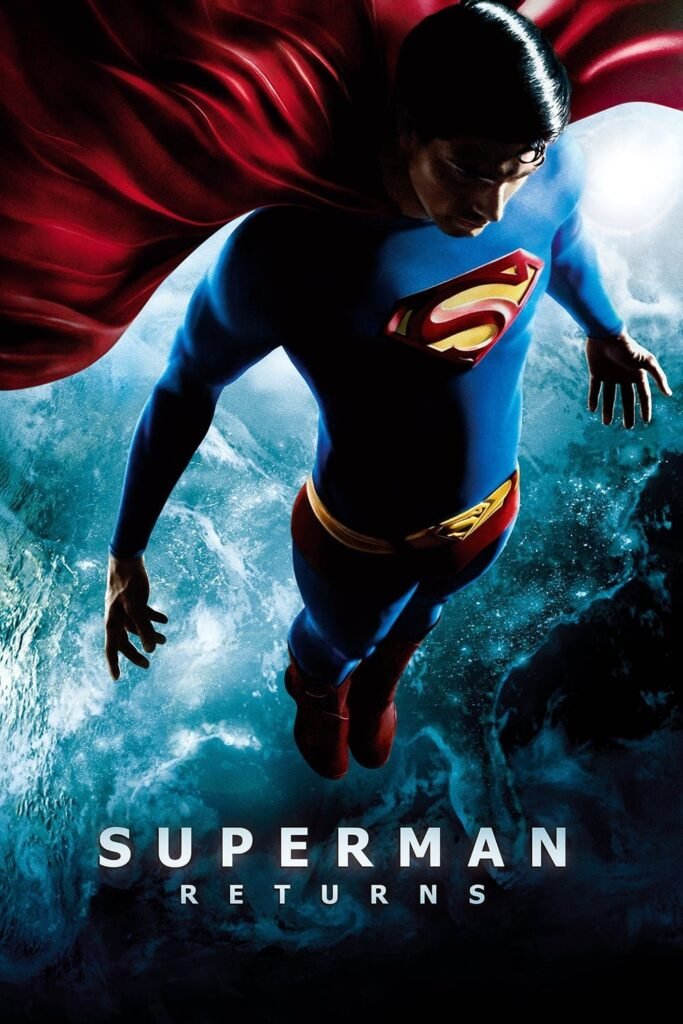
Superman Returns
Look up in the sky!
- Rating
Movie Details
Superman Returns (2006) – The Return of an Iconic Hero
Superman Returns is a 2006 superhero film directed by Bryan Singer. The movie serves as a continuation of the classic Superman story, bringing the iconic hero back to the big screen after a long absence. It reintroduces audiences to the world of Metropolis while exploring themes of identity, belonging, and responsibility.
Unlike traditional reboot-style superhero films, Superman Returns positions itself as a spiritual successor to earlier cinematic entries, focusing on emotional storytelling and character-driven drama rather than nonstop action.
At its core, the film explores what happens when a hero returns to a world that has learned to live without him.
Superman’s Return After Years Away
In Superman Returns, Clark Kent, played by Brandon Routh, comes back to Earth after spending several years away searching for remnants of his home planet, Krypton.
His return is not met with the same certainty and admiration he once had. Instead, he finds a world that has moved forward, adapted, and in some ways, forgotten him.
Lois Lane, portrayed by Kate Bosworth, has also changed. She is now a Pulitzer Prize-winning journalist and is raising a young son while maintaining a complicated emotional distance from her past with Clark.
This emotional separation becomes one of the central tensions of the story, as Superman tries to reconnect with a world that no longer feels the same.
Lex Luthor’s Return and New Scheme
A major antagonist in Superman Returns is Lex Luthor, played by Kevin Spacey. Luthor is once again plotting a large-scale scheme involving Kryptonian technology and Earth’s geography.
His plan revolves around acquiring Kryptonian crystals and using them to reshape the planet for personal gain. This creates a global threat that forces Superman back into action.
Luthor represents greed, manipulation, and human ambition unchecked by morality. His intelligence and resourcefulness make him a dangerous counterpart to Superman’s physical power and moral integrity.
The conflict between the two highlights the contrast between destruction and protection, selfishness and responsibility.
A World That Has Moved On
One of the most unique aspects of Superman Returns is its portrayal of a world that has adapted in Superman’s absence.
Metropolis has evolved, and people have learned to function without the daily presence of a superhero. This creates an emotional challenge for Superman, who must rediscover his place in society.
The absence of Superman raises questions about relevance and legacy. Is a hero still needed if the world has learned to survive without him?
This theme runs throughout the film, adding emotional weight to Superman’s return.
Lois Lane and Emotional Distance
Lois Lane plays a crucial emotional role in Superman Returns. Now more independent and focused on her career and family, she struggles with unresolved feelings toward Clark Kent.
Her personal life adds complexity to the narrative, especially as Superman attempts to reconnect with her while also respecting her current circumstances.
The emotional tension between them is not driven by romance alone, but by unresolved history and changing identities.
Lois represents how time changes relationships, even those once defined by extraordinary circumstances.
Jason and Hidden Truths
A significant emotional element in Superman Returns is Lois Lane’s son, Jason. His presence introduces new layers of mystery and emotional depth to the story.
As events unfold, it becomes increasingly clear that Jason may have a deeper connection to Superman than initially revealed.
This subplot adds personal stakes to the larger conflict, blending family dynamics with superhero mythology.
It also forces Superman to confront the idea of legacy and what it means to leave a lasting impact on the world.
The Return of Heroism
As Lex Luthor’s plan escalates, Superman is forced to step back into his role as Earth’s protector. His return to heroism is not just physical but emotional, as he must accept his responsibility once again.
This transformation reinforces the central theme of duty versus personal desire.
Superman’s decision to re-engage with the world highlights his commitment to protecting humanity, even when it comes at great personal cost.
His actions remind the world why he was once seen as its greatest defender.
Action and Visual Style
The action in Superman Returns is more restrained compared to modern superhero films. Instead of constant battles, the film focuses on key moments that emphasize Superman’s abilities and moral decisions.
Flight sequences are a major visual highlight, showcasing Superman’s connection to the world from a unique perspective.
The film’s visual style emphasizes realism and emotional tone, using slower pacing and atmospheric cinematography to reflect Superman’s internal struggle.
This approach distinguishes it from more fast-paced superhero adaptations.
Themes of Identity and Belonging
At its heart, Superman Returns is a story about identity and belonging. Superman struggles with the question of whether he still has a place in a world that has moved forward without him.
His journey reflects universal themes of displacement, purpose, and reconnection.
The film explores how identity is shaped not just by power, but by relationships and responsibility.
Superman’s return becomes symbolic of rediscovering purpose in a changed world.
Legacy and Impact
Superman Returns remains an important entry in superhero cinema for its emotional approach and focus on character-driven storytelling.
Rather than reinventing the character, it builds upon established mythology and explores what happens after the hero’s absence.
The film’s emphasis on emotional depth, legacy, and responsibility continues to influence superhero storytelling today.
For audiences interested in reflective and character-focused superhero narratives, Superman Returns offers a thoughtful exploration of what it truly means to return as a hero in a world that has already moved on.