Ryan Reynolds, Morena Baccarin, Ed Skrein, T.J. Miller, Gina Carano, Leslie Uggams, Brianna Hildebrand, Stefan Kapičić, Karan Soni, Randal Reeder, Michael Benyaer, Style Dayne, Kyle Cassie, Taylor Hickson, Ayzee, Naika Toussaint, Isaac C. Singleton, Jr., Justyn Shippelt, Donna Yamamoto, Jed Rees, Hugh Scott, Cindy Piper, Em Haine, Aatash Amir, Chad Riley, Paul Belsito, Darcey Johnson, Kyle Rideout, Jason William Day, Stan Lee, Benjamin Wilkinson, Rachel Sheen, Paul Lazenby, Rob Hayter, Andre Tricoteux, Victoria De Mare, Heather Ashley Chase, Kayla Adams, Olesia Shewchuk, Fabiola Colmenero, Colleen Bradford, John Dryden, David Hardware, Tony Chris Kazoleas, Rob Liefeld, David Longworth, Michael Neumeyer, Sean Quan, Anthony J. Sacco, David Santana, Bronwyne Sloley, Dan Zachary
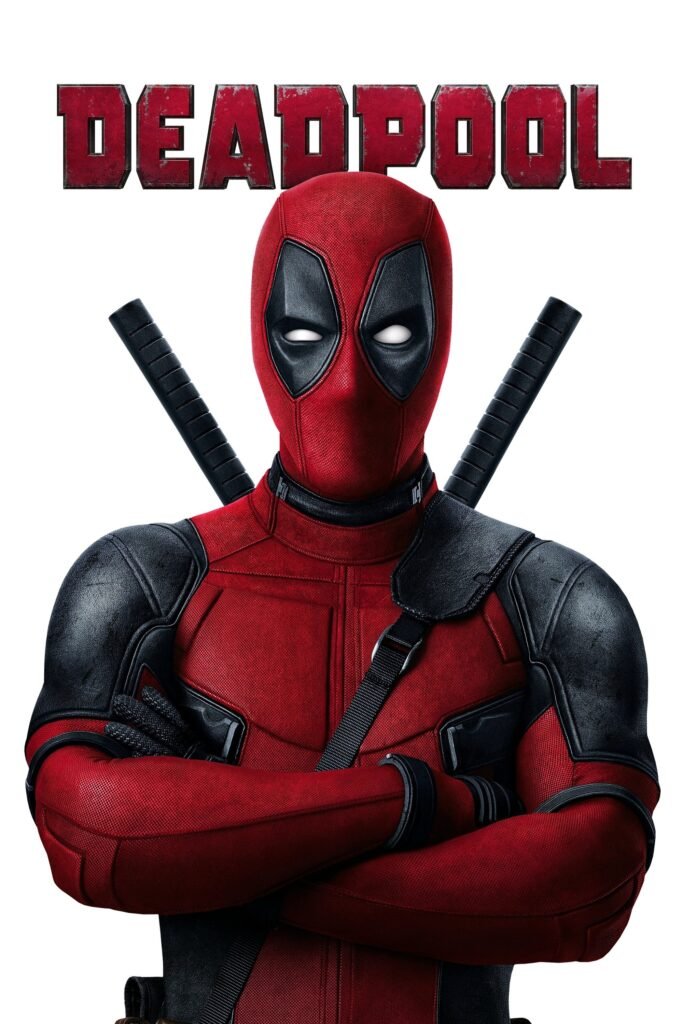
The origin story of former Special Forces operative turned mercenary Wade Wilson, who, after being subjected to a rogue experiment that leaves him with accelerated healing powers, adopts the alter ego Deadpool. Armed with his new abilities and a dark, twisted sense of humor, Deadpool hunts down the man who nearly destroyed his life.
Deadpool arrived in 2016 as a completely different kind of superhero film. Directed by Tim Miller, the movie broke away from traditional comic book storytelling and introduced audiences to a loud, violent, and self-aware antihero unlike anything seen before in mainstream cinema.
From its opening moments, Deadpool immediately signals that it refuses to follow standard superhero rules. Instead of a polished origin story told in a serious tone, the film jumps straight into chaotic action, sarcastic narration, and fourth-wall-breaking humor that constantly reminds viewers they are watching a movie.
At the center of the story is Deadpool, played by Ryan Reynolds. Once known as Wade Wilson, a former Special Forces operative, the character undergoes an experimental procedure that gives him accelerated healing abilities—but leaves him physically disfigured.
What follows is a personal revenge story wrapped in nonstop comedy, extreme violence, and emotional undertones that surprisingly give the character depth beneath the jokes.
A Different Kind of Superhero Origin Story
Unlike traditional superhero films, Deadpool does not present its origin in a linear or serious fashion. Instead, it plays with time, narration, and audience expectations. The story begins in the middle of action before slowly revealing how Wade Wilson became Deadpool.
Wade’s transformation begins when he is diagnosed with terminal cancer. In desperation, he accepts an offer from a secret program promising a cure. However, the experiment goes wrong, leaving him severely scarred but nearly immortal.
This transformation becomes the driving force behind his personality shift. While he gains regenerative powers, he also becomes deeply cynical, sarcastic, and emotionally unpredictable.
His primary motivation is revenge against the man responsible for his suffering, leading him to confront the villain Ajax, played by Ed Skrein. Ajax becomes the central antagonist, representing the cruelty and corruption behind the experiment that created Deadpool.
The movie blends this revenge narrative with constant comedic interruptions, including Deadpool talking directly to the audience, mocking superhero clichés, and even criticizing the film’s own production.
Humor, Violence, and Breaking the Rules
One of the defining characteristics of Deadpool is its unapologetic tone. The film embraces an R-rated style filled with brutal action, strong language, and adult humor.
However, what makes the humor effective is not just shock value, but timing and awareness. Deadpool constantly acknowledges the absurdity of superhero storytelling, making jokes about costumes, villains, and even other Marvel-style tropes.
This self-awareness creates a unique viewing experience where the character feels like both part of the story and outside of it at the same time.
The action scenes are equally distinctive. Fight choreography is fast, violent, and often exaggerated for comedic effect. Whether using guns, swords, or hand-to-hand combat, Deadpool’s fighting style reflects his unpredictable personality.
Supporting characters help balance the chaos. Morena Baccarin plays Vanessa, Deadpool’s love interest, who brings emotional grounding to his otherwise chaotic life.
Meanwhile, characters like Colossus and Negasonic Teenage Warhead add contrast by representing more traditional superhero values. Their presence highlights just how different Deadpool is from standard heroes.
A Strong Emotional Core Beneath the Comedy
Even though Deadpool is widely known for its humor, the film also contains a surprisingly emotional story beneath the surface.
At its core, the movie is about acceptance—both self-acceptance and acceptance from others. Wade struggles with his appearance after the experiment, believing that he is no longer worthy of love or a normal life.
His relationship with Vanessa becomes central to this emotional arc. Despite his appearance and chaotic behavior, Vanessa sees beyond the surface and connects with the person he still is inside.
This emotional foundation gives the film more weight than expected. While jokes and action dominate the screen, quieter moments reveal a more vulnerable side of the character.
The contrast between humor and emotion is what makes Deadpool stand out. It never fully commits to being serious or purely comedic; instead, it balances both in a way that feels natural to the character’s personality.
Ryan Reynolds Defines the Role
A major reason Deadpool became so successful is the performance of Ryan Reynolds. His portrayal feels perfectly aligned with the character’s tone, blending sarcasm, charm, and emotional depth.
Reynolds had been closely associated with the character for years before the film’s release, and his commitment helped shape the movie’s identity. His delivery makes even the most absurd jokes feel intentional and entertaining.
The supporting cast also contributes to the film’s success. Colossus provides a moral counterbalance, constantly trying to push Deadpool toward heroism, while Negasonic Teenage Warhead brings dry humor and deadpan reactions.
The chemistry between these characters helps create a dynamic world where different superhero philosophies collide.
Why Deadpool Changed Superhero Movies
Deadpool remains important because it proved that superhero films could break traditional formulas and still succeed at the box office. Its combination of humor, violence, and emotional storytelling opened the door for more experimental comic book adaptations.
The movie’s success also demonstrated that audiences were ready for more mature and unconventional superhero stories. Instead of following established templates, Deadpool created its own identity and leaned fully into it.
Ultimately, Deadpool works because it understands exactly what it is—a chaotic, self-aware, emotionally messy antihero story that refuses to behave like a typical superhero film, and that’s exactly why it stands out.