Shang-Chi and the Legend of the Ten Rings
You can't outrun your destiny.
- Rating
Movie Details
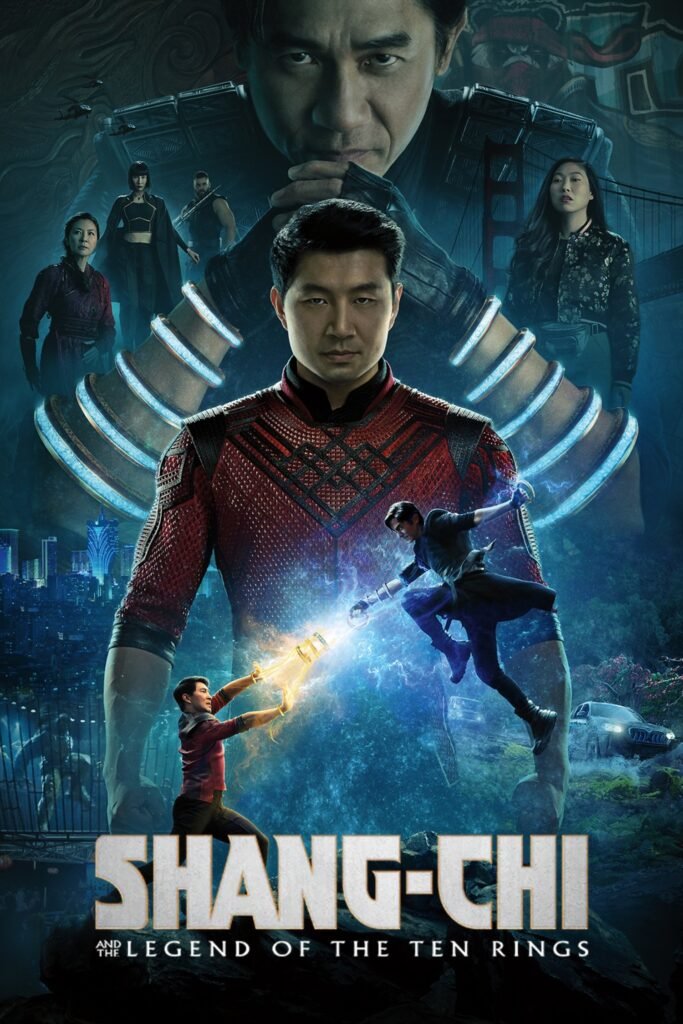
Shang-Chi and the Legend of the Ten Rings (2021), directed by Destin Daniel Cretton, introduces a fresh and visually stunning chapter in the Marvel universe. From its opening scenes, Shang-Chi and the Legend of the Ten Rings establishes itself as a story rooted in identity, family conflict, and personal destiny, all wrapped in beautifully choreographed martial arts action. It’s a film that balances emotional depth with high-energy spectacle in a way that feels both grounded and exciting.
The story follows Shang-Chi, a young man trying to leave behind his past and live a quiet life in San Francisco. However, his attempt at normalcy is disrupted when his father’s criminal organization resurfaces, pulling him back into a world he thought he had escaped. This conflict between past and present forms the emotional backbone of Shang-Chi and the Legend of the Ten Rings, giving the film more depth than a standard origin story.
From the beginning, the film carefully builds its protagonist’s background. Shang-Chi is not just a superhero discovering his powers—he is someone dealing with trauma, responsibility, and the weight of family expectations. This focus on character development helps ground the story, making his journey feel personal and relatable even within a larger-than-life universe.
One of the most striking aspects of Shang-Chi and the Legend of the Ten Rings is its action choreography. The fight sequences are fluid, creative, and heavily influenced by traditional martial arts cinema. Instead of relying solely on CGI-heavy battles, the film emphasizes physical combat, timing, and precision. Each fight feels intentional, showcasing different styles and environments that keep the action visually engaging.
The film also excels in its use of environments during combat. Whether it’s a cramped bus in San Francisco or a mystical forest hidden within another realm, each setting plays a role in shaping the action. This approach makes every sequence feel unique and helps maintain momentum throughout the film.
At its core, Shang-Chi and the Legend of the Ten Rings is also a story about family. The relationship between Shang-Chi and his father, Wenwu, is complex and emotionally charged. Wenwu is not portrayed as a simple villain but as a deeply flawed character driven by love, loss, and obsession. This layered portrayal adds emotional weight to their conflict, making their confrontations more than just physical battles.
The introduction of the Ten Rings organization adds another layer of intrigue to the story. While it has been referenced in earlier Marvel films, here it is fully explored as a powerful and mysterious force. The rings themselves are visually striking and play a significant role in both combat and storytelling, symbolizing control, power, and legacy.
As Shang-Chi is drawn deeper into this world, he reconnects with his sister, Xialing, and a group of allies who help him understand his past. These relationships add complexity to the narrative, showing different perspectives on their shared upbringing and the impact it has had on each of them. The dynamic between siblings, in particular, adds emotional tension that evolves throughout the film.
The pacing of Shang-Chi and the Legend of the Ten Rings is carefully structured. The film begins with a grounded introduction, gradually expanding into more fantastical elements as the story progresses. This transition feels natural, allowing the audience to adjust to the shifting tone without feeling overwhelmed. Each act builds on the last, increasing stakes while maintaining clarity.
Visually, the film is one of the most vibrant entries in its universe. The contrast between modern city life and mystical realms creates a dynamic visual experience. The color palettes, lighting, and production design all contribute to a sense of wonder that enhances the storytelling. Even quieter scenes are visually expressive, reinforcing the emotional tone of each moment.
Another key strength is how the film balances cultural storytelling with superhero elements. Shang-Chi and the Legend of the Ten Rings draws heavily from Asian mythology, martial arts traditions, and family dynamics, integrating them seamlessly into its narrative. This cultural grounding gives the film a distinct identity while still fitting within the larger cinematic universe.
The supporting characters also play an important role in shaping the story. Characters like Katy provide humor and emotional grounding, while others contribute to the larger mythological framework of the film. Each character serves a purpose, ensuring that the story remains focused even as it expands in scope.
As the film moves toward its climax, the stakes shift from personal conflict to a larger battle involving mystical forces. This escalation feels earned, as it builds on the emotional foundation established earlier in the story. The final sequences combine action, fantasy, and emotional resolution in a way that brings the narrative full circle.
The climactic battles are visually impressive, blending martial arts with supernatural elements. Despite the increased scale, the film maintains clarity in its action, ensuring that each moment remains easy to follow. The choreography and visual effects work together to create sequences that are both exciting and meaningful.
What makes Shang-Chi and the Legend of the Ten Rings stand out is its ability to balance so many elements without losing focus. It is at once a character study, a family drama, and a superhero origin story. Instead of overwhelming the audience, it integrates these aspects in a way that feels cohesive and engaging.
Emotional resonance is a key part of the film’s success. Shang-Chi’s journey is not just about becoming a hero, but about reconciling his past and understanding his identity. This internal conflict gives the story depth and makes his transformation more impactful.
By the time the story reaches its conclusion, Shang-Chi and the Legend of the Ten Rings delivers both closure and continuation. It resolves key emotional arcs while also expanding the larger universe in subtle ways. The ending feels satisfying while leaving room for future development.
Ultimately, Shang-Chi and the Legend of the Ten Rings succeeds because it combines strong character development, visually stunning action, and emotional storytelling. It offers a fresh perspective within its genre while staying true to its core themes of family, identity, and legacy.