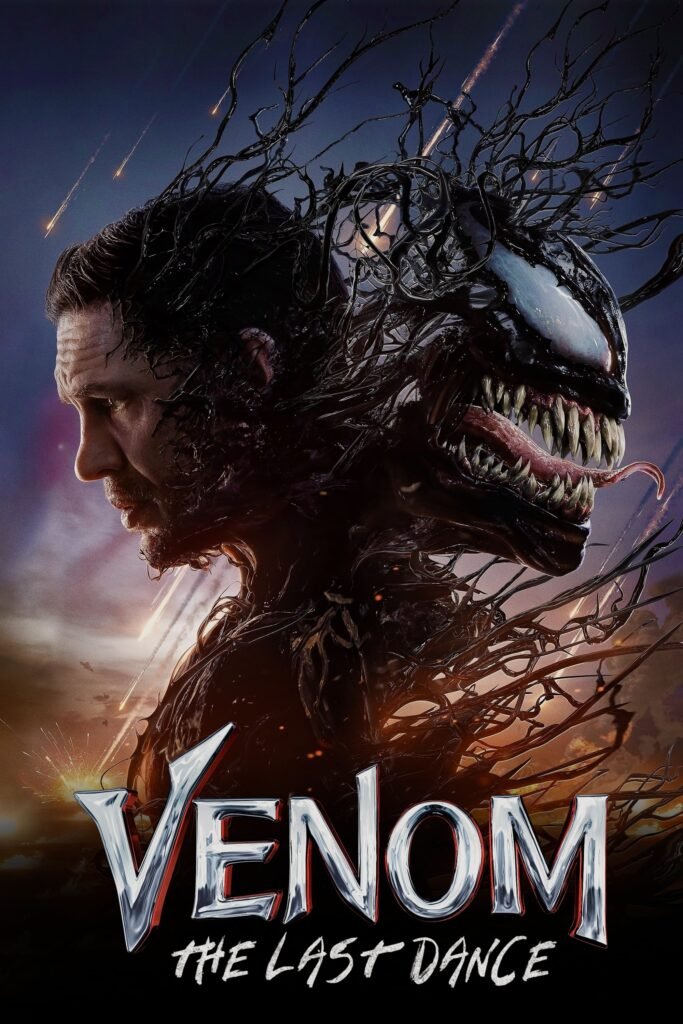
Venom: The Last Dance
'Til death do they part.
- Rating
Movie Details
Venom: The Last Dance (2024) arrives as a high-energy continuation of the symbiote saga, and it wastes no time reminding viewers exactly what makes this franchise so wild. From the opening moments, Venom: The Last Dance leans into the chaotic bond between Eddie Brock and Venom, pushing their relationship into darker, more unpredictable territory. Directed by Kelly Marcel, the film embraces both action spectacle and emotional friction, trying to balance explosive set pieces with the strange intimacy of two beings sharing one body.
As the story kicks into motion, Eddie and Venom are no longer just reluctant partners—they’re a duo constantly on the edge of collapse. Their dynamic has always been messy, but here it feels more strained than ever, as if every decision could be their last together. That tension becomes the backbone of the film, shaping everything from character choices to the escalating threats they face.
What makes Venom: The Last Dance especially interesting is how it doesn’t reset the relationship for newcomers. Instead, it assumes the audience understands the push-and-pull between Eddie and Venom, then builds on it in more extreme ways. Their conversations are still filled with sarcasm, frustration, and reluctant affection, but underneath all of that is a growing sense that their time together is running out.
As the narrative expands, the stakes rise beyond personal conflict. The world around them begins to close in, introducing forces that are determined to separate or eliminate them entirely. This shift pushes the film into a more survival-focused direction, where every encounter feels like it could tip the balance of their existence. It’s no longer just about coexistence—it’s about endurance.
Meanwhile, the action sequences continue to be a major highlight. The film doesn’t hold back when it comes to symbiote-powered chaos, delivering fights that are fast, destructive, and visually overwhelming. Venom’s abilities are showcased in increasingly creative ways, from massive transformations to brutal close-quarters combat. Each battle feels like an escalation, not just in scale but in intensity.
At the same time, the film doesn’t rely solely on action to carry the experience. There are quieter moments that focus on Eddie’s internal struggle, especially as he tries to maintain control over a life that is anything but normal. Living with Venom has always meant giving up a sense of stability, but here that instability feels more permanent than ever. The emotional toll is subtle but constant, adding depth between the bursts of chaos.
Transitioning between these tones, the film often shifts from high-energy action to surprisingly introspective scenes. One moment, the screen is filled with destruction and frantic movement, and the next, it slows down to focus on a conversation between two entities sharing the same mind. That contrast is part of what defines Venom: The Last Dance, making it feel unpredictable even when the overall direction is clear.
Additionally, the relationship between Eddie and Venom continues to evolve in unexpected ways. What once felt like a forced partnership has gradually become something closer to dependency, even friendship in its own unusual form. They argue constantly, but there’s also a sense that neither truly wants to exist without the other. This emotional contradiction gives the film its core identity, grounding all the spectacle in something surprisingly relatable.
As external threats intensify, the film introduces new challenges that test not only their physical limits but also their trust in one another. These confrontations force both characters to reconsider what they are willing to sacrifice. The idea of separation looms heavily over the story, creating tension that runs beneath every interaction.
At the same time, Venom: The Last Dance doesn’t shy away from humor, even in its darker moments. Much of that comes from the ongoing banter between Eddie and Venom, which continues to be one of the franchise’s most distinctive elements. Their conversations often shift from comedic arguments to existential debates within seconds, keeping the tone unpredictable but engaging.
Visually, the film maintains the franchise’s signature style of blending gritty realism with surreal symbiote transformations. Venom himself remains a striking presence, constantly shifting shape in ways that feel both alien and expressive. This visual fluidity reinforces the idea that he is not just a weapon or parasite, but a fully realized character with his own identity.
As the story progresses, the emotional weight becomes more pronounced. Eddie is forced to confront what his life has become, while Venom begins to express a deeper awareness of their shared situation. That awareness adds a layer of melancholy beneath the action, suggesting that their journey together may be approaching a natural endpoint.
Even as new conflicts emerge, the film keeps returning to the central idea of connection. Whether that connection is healthy, destructive, or something in between, it remains the driving force behind everything that happens. The bond between Eddie and Venom is not simple, and the film embraces that complexity rather than trying to resolve it too neatly.
By the time the story reaches its final stretch, Venom: The Last Dance has fully committed to both its emotional and chaotic sides. The action becomes more intense, the stakes more personal, and the relationship between its central characters more fragile. Everything builds toward a sense of finality, even when the path forward remains uncertain.
Ultimately, Venom: The Last Dance stands as a story about coexistence under pressure, where two mismatched beings must navigate a world that refuses to accept them as one. It mixes humor, destruction, and emotional tension in a way that keeps the experience constantly shifting, never allowing it to settle into one predictable tone.