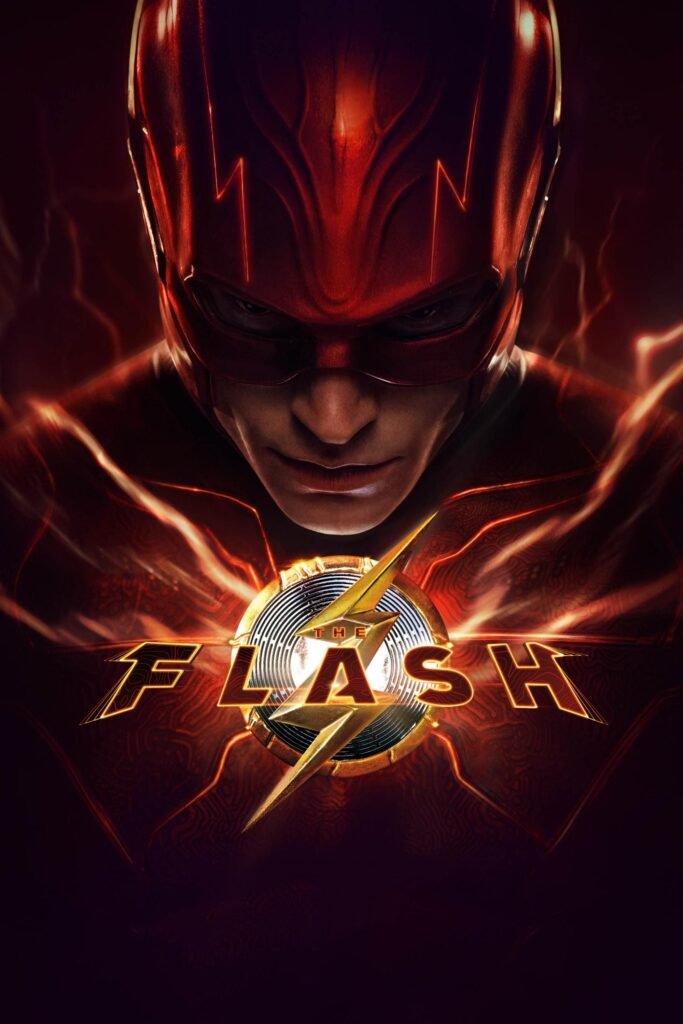
The Flash
Worlds collide.
- Rating
Movie Details
The Flash (2023): Speed, Time Travel, and the Cost of Changing Everything
The Flash (2023) hits the ground running—literally—and right from the opening moments, The Flash makes it clear this is more than just a superhero movie about speed. Directed by Andy Muschietti, the film dives headfirst into time travel, alternate realities, and the emotional weight of trying to fix the past. It’s fast, chaotic, and surprisingly personal, all wrapped into one multiverse-spanning story.
As the narrative kicks off, Barry Allen is already established as a hero, but he’s far from having things figured out. Beneath the humor and awkward charm, there’s a deeper motivation driving him: the desire to undo a painful moment in his life. That emotional core becomes the foundation of everything that follows, giving the film a sense of purpose beyond its action-heavy surface.
A Story Built on Time Travel Consequences
At the heart of The Flash (2023) is a classic “what if” scenario. Barry discovers he can travel back in time, and naturally, he sees an opportunity to change a defining event from his past. It’s a simple idea on paper, but the execution quickly spirals into something much bigger.
Instead of creating a perfect outcome, his actions ripple outward, altering reality in ways he never expected. This shift introduces the concept of alternate timelines, where small changes lead to massive consequences. As a result, the story becomes less about fixing one mistake and more about dealing with the fallout of trying to control time itself.
Because of this, the stakes escalate quickly. What starts as a personal mission turns into a race to stabilize a fractured timeline, adding urgency and tension to every decision Barry makes.
Two Versions of Barry, One Complicated Journey
One of the film’s most interesting elements is the introduction of another version of Barry Allen. This younger, less experienced version brings a completely different energy to the story, creating both comedic and dramatic moments.
At first, their interactions lean heavily into humor, with the more mature Barry trying to guide his alternate self. However, as the story progresses, that dynamic becomes more layered. The differences between them highlight how much Barry has grown—and how much he still has to learn.
This dual perspective adds depth to the narrative. Instead of focusing on a single hero, the film explores how different choices and experiences shape who someone becomes. It’s a clever way to use the multiverse concept to reflect character growth.
Action That Moves at Lightning Speed
Of course, a film centered around The Flash wouldn’t be complete without high-speed action, and this movie delivers plenty of it. The visual representation of speed is one of its standout features, with sequences that blend slow motion and rapid movement in creative ways.
Rather than simply showing Barry running fast, the film emphasizes how he interacts with time itself. Objects freeze, environments shift, and moments stretch out, creating a unique visual style that sets it apart from other superhero films.
At the same time, the action isn’t just about spectacle. Each sequence ties back to the story, whether it’s an attempt to fix a mistake or a desperate effort to prevent further damage. This connection helps keep the action meaningful rather than purely decorative.
A Multiverse Full of Surprises
As Barry’s journey unfolds, the film fully embraces the idea of a multiverse. Alternate realities open the door to unexpected encounters, familiar faces in new roles, and entirely different versions of the world.
This approach adds a sense of unpredictability to the story. Just when things seem to settle, another twist changes the direction, keeping viewers engaged. It also allows the film to explore different interpretations of its characters without being tied to a single timeline.
However, the multiverse isn’t just used for spectacle. It reinforces the central theme that every choice has consequences. Each alternate reality serves as a reminder that changing the past isn’t as simple as it seems.
Balancing Humor and Emotional Weight
One of the defining traits of The Flash (2023) is its tone. The film blends humor with emotional storytelling, often shifting between the two within the same scene. Barry’s personality naturally lends itself to lighter moments, but those moments are balanced by more serious themes.
The emotional core of the story revolves around loss and acceptance. Barry’s journey forces him to confront the idea that some things can’t—or shouldn’t—be changed. This realization adds depth to his character, making his choices feel more impactful.
Because of this balance, the film avoids becoming too heavy while still delivering meaningful moments. The humor keeps things accessible, while the emotional stakes ensure the story resonates.
Visual Style and World-Building
Visually, The Flash leans into a stylized approach that reflects its time-bending narrative. The environments shift and distort as Barry moves through time, creating a sense of constant motion even when the story slows down.
The design of different timelines also helps distinguish them from one another. Subtle changes in setting and tone reinforce the idea that these worlds are connected but not identical. This attention to detail adds to the immersion, making each version of reality feel unique.
At the same time, the film uses its visual effects to highlight the instability of the timeline. Cracks in reality, overlapping moments, and fragmented scenes all contribute to the sense that things are falling apart.
Themes That Drive the Story
Beneath all the action and multiverse elements, The Flash (2023) is ultimately about choice and consequence. Barry’s journey is shaped by his desire to change the past, but the film makes it clear that every action has a cost.
Another key theme is acceptance. As much as Barry wants to fix everything, he’s forced to confront the limits of his power. This realization becomes a turning point, pushing him toward a more mature understanding of what it means to be a hero.
Additionally, the idea of identity plays a role throughout the film. Seeing different versions of himself forces Barry to question who he is and who he wants to become. This internal conflict adds depth to the story, grounding it in character development.
A High-Speed Story with Lasting Impact
The Flash (2023) stands out because it combines large-scale spectacle with a personal narrative. It’s not just about saving the world—it’s about understanding the consequences of trying to change it.
By blending fast-paced action, multiverse exploration, and emotional storytelling, the film creates an experience that feels both exciting and thoughtful. It takes risks with its concept while still delivering the kind of entertainment audiences expect.
In the end, what makes The Flash memorable isn’t just the speed or the visuals—it’s the journey of a character learning that some moments are meant to shape us, not be rewritten.