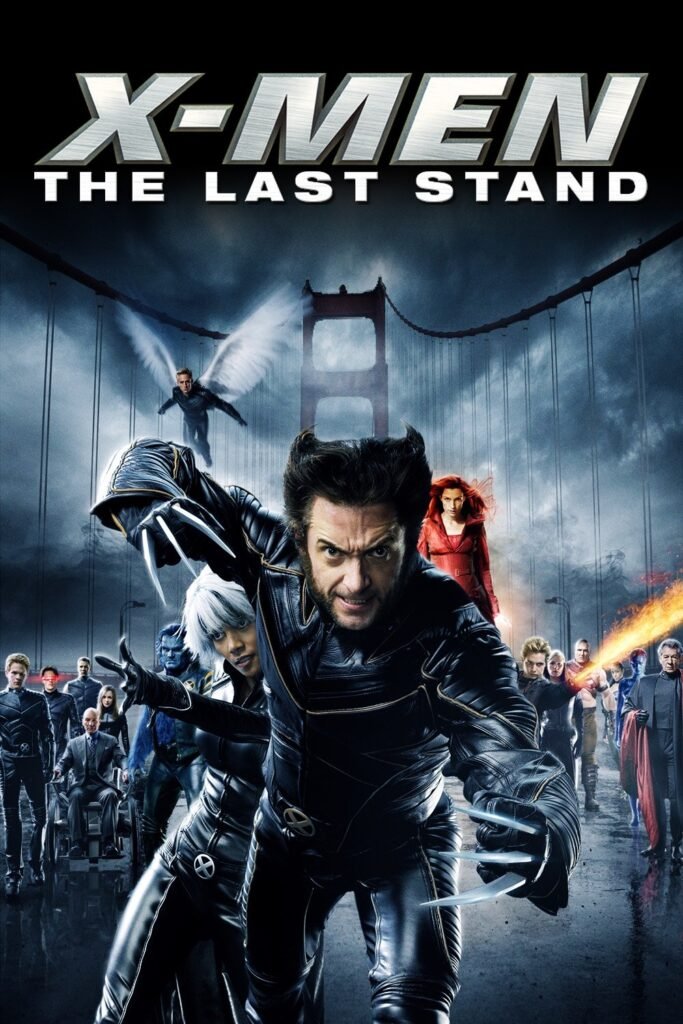
X-Men: The Last Stand
Take a stand.
- Rating
Movie Details
X-Men: The Last Stand (2006) – A Mutant Conflict Reaches Its Peak
X-Men: The Last Stand is a 2006 superhero film directed by Brett Ratner, serving as the third installment in the popular mutant-centered franchise. The film escalates the conflict between humans and mutants, introducing a controversial “cure” that threatens the very existence of mutantkind.
As the focus keyword X-Men: The Last Stand suggests, this chapter revolves around ultimate choices, irreversible consequences, and the idea of what it means to be different in a world that fears mutation.
At its core, the film explores identity, acceptance, and the cost of power when society demands conformity.
A World Divided by Fear and Hope
In X-Men: The Last Stand, the world is more divided than ever. Humans and mutants are locked in escalating tension, with governments seeking solutions to what they perceive as a growing “mutant problem.”
A controversial scientific breakthrough introduces a potential cure for mutation. This discovery immediately fractures the mutant community, creating ideological conflict between those who see it as salvation and those who see it as erasure.
This debate becomes the emotional foundation of the story, raising questions about identity and whether mutation is something to be cured or embraced.
The X-Men and Leadership Under Pressure
The X-Men continue their mission to protect both mutants and humans, operating under the leadership of Professor Charles Xavier, played by Patrick Stewart.
Xavier represents balance, diplomacy, and peaceful coexistence. His belief in mutual understanding guides the X-Men’s approach, even as tensions escalate.
Opposing his philosophy is Magneto, played by Ian McKellen, who believes mutants must defend themselves aggressively against human oppression. His ideology becomes even more radical as the cure becomes widespread.
The ideological clash between Xavier and Magneto forms the backbone of the entire narrative.
Jean Grey and the Phoenix Force
A major emotional and narrative turning point in X-Men: The Last Stand revolves around Jean Grey, played by Famke Janssen.
Jean returns under mysterious circumstances after the events of previous conflicts, but it becomes clear that a powerful alter ego known as the Phoenix Force has awakened within her.
This transformation makes Jean one of the most powerful and unstable beings on the planet. Her abilities grow uncontrollably, creating both awe and destruction.
The struggle between Jean Grey and the Phoenix Force introduces themes of identity fragmentation, emotional trauma, and power without control.
Wolverine and Emotional Conflict
Wolverine, played by Hugh Jackman, plays a central role in the story as both a fighter and emotional anchor within the team.
His connection to Jean Grey adds personal stakes to the broader conflict. Wolverine is forced to confront difficult emotional decisions as Jean’s transformation becomes increasingly dangerous.
His character represents instinct, loyalty, and emotional resilience in the face of overwhelming power and loss.
The Mutant Cure Debate
One of the most significant plot elements in X-Men: The Last Stand is the introduction of a “mutant cure,” developed as a potential solution to mutation.
This cure creates division among mutants. Some see it as a chance to live normal human lives, while others view it as a violation of identity and existence.
The debate becomes symbolic of real-world issues related to acceptance, identity, and societal pressure to conform.
Magneto and his followers reject the cure entirely, viewing it as a weapon of oppression rather than liberation.
The Brotherhood and Rising Conflict
Magneto’s Brotherhood of Mutants escalates its opposition to human authority in response to the cure. Their actions become increasingly aggressive as they prepare for open conflict.
The Brotherhood believes that mutants must take control of their destiny rather than rely on human institutions that seek to suppress them.
This escalation leads to large-scale confrontations between mutants and government forces, pushing the conflict toward its climax.
Action and Large-Scale Battles
The action in X-Men: The Last Stand is characterized by large-scale battles involving multiple mutant abilities used simultaneously.
Each character contributes unique powers, creating visually dynamic combat sequences. These battles often take place in urban environments, laboratories, and battlefields where ideological conflict becomes physical confrontation.
The film emphasizes the scale of mutant abilities, showcasing destruction, defense, and strategic teamwork.
Themes of Identity and Choice
At its core, X-Men: The Last Stand is about identity and choice. The introduction of the cure forces every character to decide who they are and whether they want to change.
Some characters embrace transformation, while others reject it entirely. These decisions highlight the complexity of identity and the pressure to conform in a divided society.
Jean Grey’s struggle with the Phoenix Force further reinforces this theme, showing what happens when identity itself becomes unstable.
Sacrifice and Consequences
As the story progresses, the consequences of power, choice, and ideology become unavoidable. Characters are forced to make sacrifices that permanently alter the future of mutantkind.
These sacrifices emphasize the emotional weight of the conflict, where victories often come at a significant cost.
The film underscores the idea that every choice carries consequences, especially when dealing with power on a global scale.
Legacy and Impact
X-Men: The Last Stand remains a significant entry in superhero cinema for its exploration of ideological conflict and identity-based storytelling.
While its narrative divides opinion among fans, it continues to be discussed for its ambitious attempt to resolve long-running character arcs and thematic tensions.
The film’s focus on mutation, acceptance, and transformation helped shape later superhero stories that explore similar themes.
For audiences interested in large-scale superhero conflicts and moral dilemmas, X-Men: The Last Stand delivers a dramatic conclusion to a major chapter in mutant storytelling.