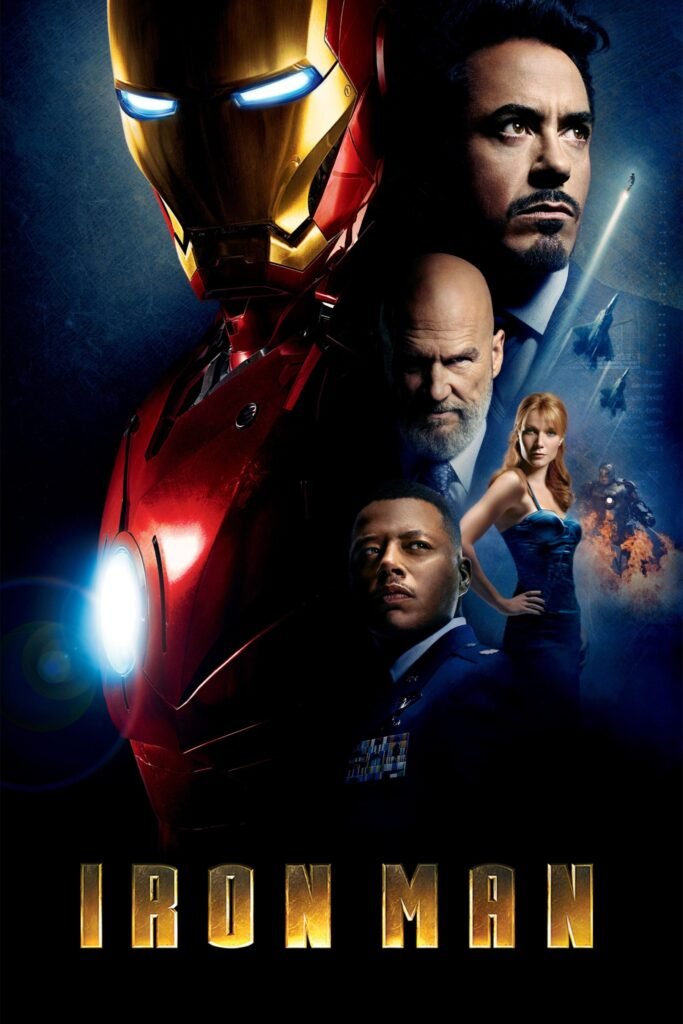
Robert Downey Jr., Terrence Howard, Jeff Bridges, Gwyneth Paltrow, Leslie Bibb, Shaun Toub, Faran Tahir, Clark Gregg, Bill Smitrovich, Sayed Badreya, Paul Bettany, Jon Favreau, Peter Billingsley, Tim Guinee, Will Lyman, Tom Morello, Marco Khan, Daston Kalili, Ido Mor, Kevin Foster, Garret Noël, Eileen Weisinger, Ahmed Ahmed, Fahim Fazli, Gerard Sanders, Tim Rigby, Russell Richardson, Nazanin Boniadi, Thomas Craig Plumer, Robert Berkman, Stacy Stas Hurst, Lauren Scyphers, Frank Nyi, Marvin Jordan, Jim Cramer, Donna Evans, Reid Harper, Summer Kylie Remington, Ava Rose Williams, Vladimir Kubr, Callie Croughwell, Javan Tahir, Sahar Bibiyan, Patrick O'Connell, Adam Harrington, Meera Simhan, Ben Newmark, Ricki Lander, Jeannine Kaspar, Sarah Cahill, Stan Lee, Justin Rex, Zorianna Kit, Lana Kinnear, Nicole Lindeblad, Masha Lund, Gabrielle Tuite, Tim Griffin, Joshua Harto, Micah A. Hauptman, James Bethea, Mike Cochrane, Flavia Manes Rossi, Samuel L. Jackson, Kristin J. Hooper
After being held captive in an Afghan cave, billionaire engineer Tony Stark creates a unique weaponized suit of armor to fight evil.
Iron Man (2008) – The Movie That Changed Superhero Cinema
Iron Man arrived in 2008 and completely reshaped the superhero movie genre. Directed by Jon Favreau, the film introduced audiences to Tony Stark, a billionaire inventor whose life changes after a near-death experience forces him to rethink his legacy.
At the time, superhero movies were already popular, but Iron Man stood out because of its personality, humor, grounded storytelling, and charismatic lead performance. Instead of focusing only on large-scale action, the movie balanced explosive combat with character development and sharp dialogue.
More importantly, the film became the foundation of the Marvel Cinematic Universe, launching a connected franchise that would dominate modern blockbuster filmmaking for years to come.
Tony Stark’s Transformation
The story of Iron Man begins with Tony Stark, played by Robert Downey Jr., as a brilliant but arrogant weapons manufacturer. Stark enjoys wealth, fame, and technological success without seriously considering the consequences of his company’s creations.
Everything changes when he is captured during a weapons demonstration overseas. Injured and trapped, Stark is forced to confront the damage caused by the very technology that made him successful.
While imprisoned, he builds the first version of the Iron Man armor alongside fellow captive Yinsen. The suit becomes both a survival tool and the beginning of Stark’s transformation into a hero.
This origin story works because it feels personal. Tony Stark is not born a hero. Instead, he slowly becomes one after recognizing his own flaws and responsibilities.
The emotional growth throughout the film gives Iron Man much of its lasting impact.
A Different Kind of Superhero
One of the biggest reasons Iron Man connected with audiences was Tony Stark himself. Unlike traditional heroes who often hide behind mystery or moral perfection, Stark is sarcastic, impulsive, and openly flawed.
Robert Downey Jr.’s performance became instantly iconic because of the balance between humor, confidence, and vulnerability. His version of Tony Stark feels human despite the advanced technology surrounding him.
The movie also avoids making Stark immediately perfect at being Iron Man. Many scenes focus on experimentation, failed tests, and suit malfunctions. These moments add humor while also making the technology feel believable and grounded.
As a result, audiences become invested not only in the action but also in Stark’s personal journey toward responsibility and redemption.
Action, Technology, and Armor Design
Action plays a major role throughout Iron Man, but the film’s technology-focused approach gives it a unique identity compared to other superhero movies from the same era.
The armor itself becomes one of the movie’s most memorable elements. Watching Tony Stark design, test, and improve the suit creates excitement because viewers see the evolution step by step.
From the bulky Mark I armor to the sleek red-and-gold suit, each version reflects Stark’s growing intelligence and determination. The attention to detail in the suit-building process helped make the technology feel realistic and immersive.
The combat scenes also combine aerial movement, missile attacks, and close-range battles in ways that felt fresh at the time. Instead of relying purely on fantasy powers, the movie grounds its action in engineering and mechanical design.
Director Jon Favreau balances explosive sequences with lighter comedic moments, giving the movie an energetic and accessible tone.
Obadiah Stane and Corporate Corruption
The main antagonist of Iron Man is Obadiah Stane, played by Jeff Bridges. At first, Stane appears to be a trusted business partner and mentor figure within Stark Industries.
However, as the story unfolds, his true motivations become clear. Stane represents the darker side of corporate greed and weaponized technology, serving as a reflection of who Tony Stark could have remained without personal growth.
The conflict between Stark and Stane is not only physical but ideological. Stark begins moving away from weapons manufacturing, while Stane fully embraces profit and power regardless of consequences.
This theme of accountability becomes central to the movie’s narrative and helps ground the superhero elements in real-world concerns.
Supporting Characters and World Building
Another strength of Iron Man is its supporting cast. Gwyneth Paltrow plays Pepper Potts, Stark’s loyal assistant who provides emotional balance and support throughout the film.
Meanwhile, Terrence Howard portrays James Rhodes, Stark’s military ally and longtime friend. Their chemistry helps establish the larger world surrounding Tony Stark and hints at future developments within the franchise.
The movie also introduces the idea of interconnected storytelling through subtle references and world-building details. At the time, audiences did not fully realize how important those seeds would become for future Marvel films.
This sense of expansion made Iron Man feel larger than a standalone superhero movie.
Why Iron Man Still Matters
Even years after its release, Iron Man remains one of the most important superhero films ever made. It succeeded because it focused on strong character writing, practical humor, and grounded emotional stakes rather than relying only on spectacle.
The movie also demonstrated that audiences could connect deeply with flawed and complicated heroes. Tony Stark’s personal growth became just as important as the action itself.
Christopher Nolan’s darker approach with Batman was influencing superhero cinema during the same period, yet Iron Man found success by taking a different route—mixing realism with humor, optimism, and technological creativity.
The film’s influence can still be seen throughout modern blockbuster filmmaking. From connected cinematic universes to character-driven superhero storytelling, many trends that define today’s comic-inspired movies trace back to the success of Iron Man.
More than just an origin story, the movie introduced a new era of superhero entertainment built around personality, long-term storytelling, and larger interconnected worlds.