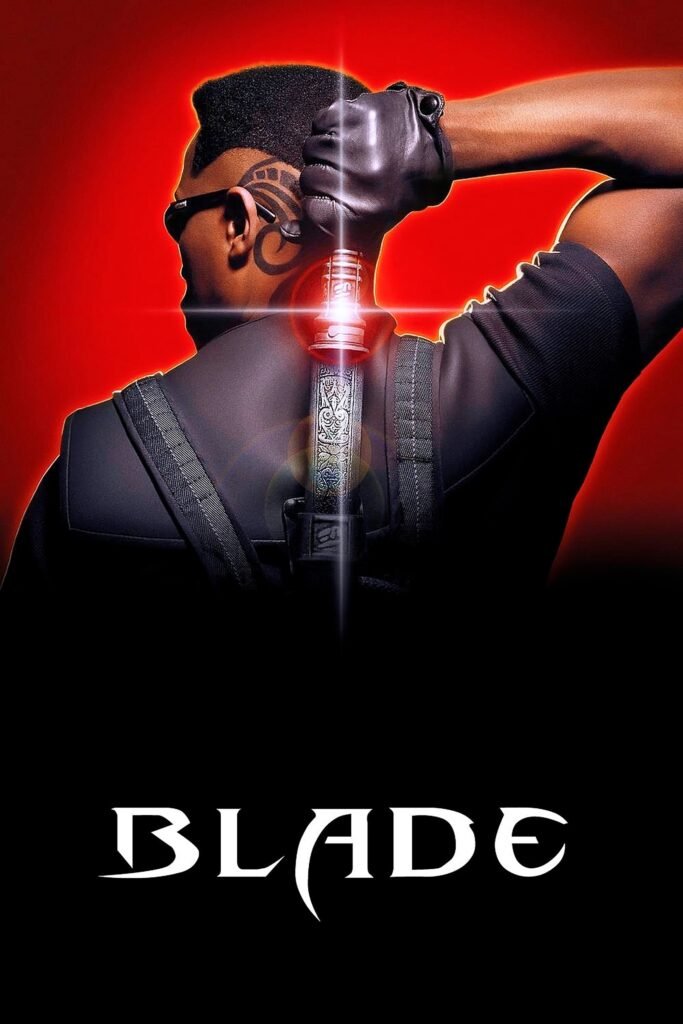
Blade
Against an army of Immortals, one warrior must draw first blood.
- Rating
Movie Details
Blade (1998): The Daywalker That Changed Superhero Cinema
Blade (1998) doesn’t ease you into its world—it throws you straight into a blood-soaked underground rave and never really lets up. Right from the opening scene, Blade establishes its tone as dark, stylish, and unapologetically intense. This isn’t your typical comic book movie, and that’s exactly why it stands out. Directed by Stephen Norrington, the film blends vampire horror with martial arts action, creating something that feels fresh even decades later.
As the story unfolds, it becomes clear that Blade isn’t just about flashy fights or cool visuals. At its core, it’s about identity, survival, and the constant battle between two worlds. The main character walks a fine line—half-human, half-vampire—making him both a protector and an outsider. That duality drives the narrative forward and gives the film a depth that goes beyond its action-heavy surface.
A Hero Unlike the Rest
What makes Blade so compelling is how different he feels compared to other heroes of the time. He’s not overly talkative, he doesn’t rely on humor, and he certainly doesn’t play by the rules. Instead, he’s focused, relentless, and driven by a clear purpose: eliminate vampires before they take over the human world.
At the same time, there’s an underlying struggle that defines his character. Being part vampire means he constantly fights against his own nature. This internal conflict adds tension to nearly every scene he’s in, making his victories feel earned rather than effortless. It also gives the audience a reason to connect with him beyond just the action.
Meanwhile, his partnership with Whistler adds another layer to the story. Acting as both mentor and ally, Whistler helps ground Blade’s mission, providing support while also reminding him of what’s at stake. Their dynamic brings balance to the film, preventing it from becoming too one-dimensional.
A World Hidden in Plain Sight
One of the most interesting aspects of Blade (1998) is how it portrays vampires. Instead of lurking in castles or isolated settings, they exist within modern society, blending in with humans while secretly controlling powerful institutions. This idea adds a sense of realism to the film, making the threat feel closer and more immediate.
Because of this, the stakes are higher than they might initially appear. It’s not just about stopping individual vampires—it’s about preventing an entire hidden world from rising to power. This larger conflict gives the story a sense of urgency, pushing Blade to act quickly and decisively.
At the same time, the film doesn’t overcomplicate its world-building. It introduces just enough detail to make the setting believable while keeping the focus on action and character development. As a result, the pacing remains tight, and the story never feels bogged down.
Action That Still Hits Hard
Even years after its release, the action in Blade continues to hold up. The fight scenes are fast, brutal, and choreographed with precision, blending martial arts with weapon-based combat. Every encounter feels purposeful, showcasing Blade’s skill and efficiency as a hunter.
In addition, the film makes great use of practical effects alongside early CGI. While some of the visual effects may show their age, they still contribute to the film’s unique style. The combination of physical stunts and digital enhancements creates a gritty, grounded feel that works perfectly for the story.
Another key element is the film’s pacing. It doesn’t waste time building up to action—it delivers it consistently throughout. This approach keeps viewers engaged, ensuring there’s always something happening on screen. At the same time, quieter moments are used effectively to develop characters and set up future conflicts.
A Villain With Ambition
A strong hero needs a strong villain, and Blade delivers in that department. Deacon Frost isn’t just another antagonist—he represents a new generation of vampires, one that’s eager to break away from tradition and seize control.
Unlike older, more reserved members of the vampire hierarchy, Frost is ambitious and unpredictable. He’s not content with hiding in the shadows; he wants to reshape the world entirely. This makes him a perfect counterpart to Blade, as both characters are defined by their desire to challenge the status quo.
Their conflict goes beyond simple good versus evil. It’s also about ideology—one fighting to protect humanity, the other aiming to dominate it. This clash of perspectives adds depth to their encounters, making each confrontation more meaningful.
Style, Sound, and Atmosphere
Blade (1998) isn’t just memorable for its story or characters—it’s also known for its distinct style. The film embraces a dark, urban aesthetic, using shadows, neon lighting, and industrial settings to create a moody atmosphere. This visual approach helps set it apart from other films of its era.
At the same time, the soundtrack plays a huge role in shaping the experience. With its mix of electronic and techno beats, the music complements the fast-paced action and gritty tone. It gives the film a unique energy that enhances every scene, from intense battles to quieter character moments.
Together, these elements create a cohesive style that feels both immersive and iconic. It’s the kind of film where the look and sound are just as important as the story itself.
Themes That Keep It Grounded
Despite its focus on action, Blade also explores several underlying themes. Identity is at the forefront, as the main character struggles to define himself in a world where he doesn’t fully belong. This sense of isolation adds emotional weight to the story, making his journey more relatable.
There’s also a strong emphasis on control—both internal and external. Blade must constantly manage his own instincts, while also fighting against a larger force that seeks to control humanity. This dual struggle reinforces the film’s central conflict, tying everything together.
Additionally, the idea of coexistence is subtly woven into the narrative. While the film doesn’t offer easy answers, it raises questions about whether two opposing worlds can ever truly exist side by side.
A Lasting Impact on the Genre
Looking back, Blade (1998) played a significant role in shaping modern comic book movies. At a time when the genre wasn’t as dominant as it is today, it proved that darker, more mature stories could succeed on the big screen.
Its success opened the door for future adaptations, showing that audiences were ready for something different. Even now, its influence can be seen in the way superhero films balance action with character-driven storytelling.
More importantly, it remains an entertaining and engaging film in its own right. With its mix of action, style, and compelling characters, Blade continues to stand as a defining entry in both the vampire and superhero genres.