Venom: Let There Be Carnage
You are what you eat.
- Rating
Movie Details
A Chaotic Symbiote Return
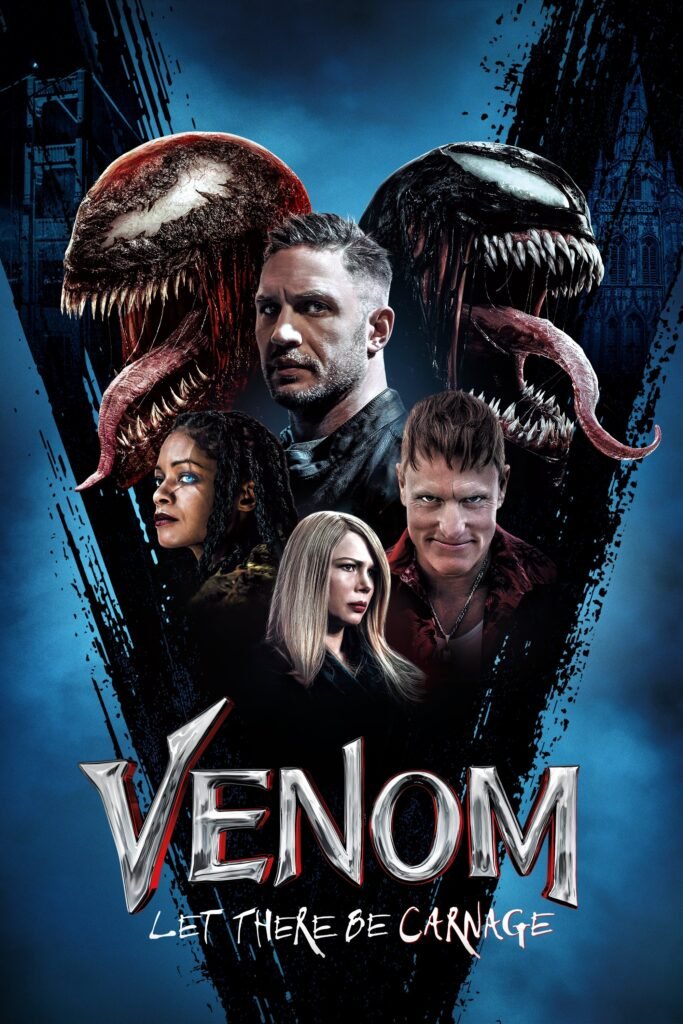
Venom: Let There Be Carnage (2021), directed by Andy Serkis, brings back the wild, chaotic energy of Eddie Brock and his symbiote counterpart in a way that is louder, faster, and more unhinged than the first film. From the opening scenes, Venom: Let There Be Carnage dives straight into the strange and unstable relationship between man and alien symbiote, setting the tone for a story that refuses to slow down.
The film immediately embraces its identity as a mix of dark comedy, superhero chaos, and monster-driven action. While not trying to be overly serious, it still builds a narrative around emotional conflict, identity struggles, and destructive relationships.
Eddie and Venom’s Unstable Relationship
At the center of Venom: Let There Be Carnage is the chaotic dynamic between Eddie Brock and Venom. Their relationship feels less like a partnership and more like a constant argument between two personalities sharing one body.
This internal conflict drives much of the humor and tension throughout the film. Eddie wants control and stability, while Venom thrives on chaos and freedom. As a result, their interactions often feel like a dysfunctional roommate situation that escalates into full-blown destruction.
Because of this, Venom: Let There Be Carnage doesn’t just focus on external threats—it also explores internal identity struggles in a very unconventional way.
The Rise of Carnage and New Threats
The introduction of Cletus Kasady and his symbiote Carnage significantly raises the stakes. Unlike Venom, Carnage is purely destructive, unpredictable, and far more violent in nature.
In Venom: Let There Be Carnage, this new antagonist creates a direct contrast to Eddie’s chaotic but controlled personality. Where Venom still shows moments of restraint, Carnage represents complete loss of control.
This dynamic creates a natural conflict that pushes the story forward quickly, leading to increasingly intense confrontations as the film progresses.
Fast-Paced Action and Visual Style
One of the most noticeable aspects of Venom: Let There Be Carnage is its fast pacing. The film rarely slows down, instead moving quickly from one action sequence to the next.
The symbiote battles are visually intense, filled with fluid transformations, explosive movement, and exaggerated combat styles. While the film doesn’t aim for realism, it fully commits to its comic-book-inspired aesthetic.
Andy Serkis brings a motion-driven visual style that emphasizes movement and energy. As a result, every fight scene feels dynamic, even when the narrative is relatively simple.
Dark Humor and Tonal Balance
Humor plays a major role in Venom: Let There Be Carnage. Much of the comedy comes directly from the interactions between Eddie and Venom, whose constant disagreements often lead to absurd situations.
These moments help balance the darker elements of the film, especially when Carnage enters the story and introduces a more violent tone. The contrast between humor and horror-like action creates a unique viewing experience that doesn’t fully commit to one genre.
Instead, Venom: Let There Be Carnage blends tones in a way that keeps the film unpredictable and entertaining.
Cletus Kasady and Emotional Depth
While Carnage is the physical threat, Cletus Kasady provides the emotional foundation for the conflict. His connection to Eddie Brock is rooted in shared history, obsession, and resentment.
This relationship adds depth to the story, even if it is not explored in a highly complex way. Cletus is driven by emotion rather than logic, making him a volatile antagonist whose actions are difficult to predict.
As a result, Venom: Let There Be Carnage gains a personal edge that elevates it beyond simple monster-versus-hero storytelling.
Pacing and Narrative Simplicity
The structure of Venom: Let There Be Carnage is intentionally straightforward. The film prioritizes momentum over complexity, focusing on keeping the story moving rather than building intricate plot layers.
This approach works in favor of the film’s tone. Because the relationship between Eddie and Venom is already chaotic, a fast-moving narrative complements their energy.
Transitions between scenes are quick and direct, ensuring that the audience remains engaged without long pauses or heavy exposition.
Action Climax and Symbiote Chaos
As the film builds toward its climax, the conflict between Venom and Carnage reaches full intensity. The final battle is a mix of destruction, transformation, and high-energy symbiote combat.
In Venom: Let There Be Carnage, the climax focuses less on strategic fighting and more on raw power and instinct. This creates a visually explosive finale that fits the tone of the film perfectly.
The symbiotes clash in unpredictable ways, constantly shifting forms and abilities, which keeps the action visually engaging even during fast sequences.
Themes of Identity and Control
Underneath the chaos, Venom: Let There Be Carnage explores themes of identity, control, and coexistence. Eddie and Venom’s relationship reflects the struggle between order and chaos, responsibility and impulse.
While these themes are not deeply philosophical, they are consistently present throughout the film. The constant negotiation between Eddie and Venom highlights the idea that identity is not always singular, but shared and evolving.
This underlying concept gives the film more substance than its surface-level action might suggest.
Final Take on Venom’s Sequel Energy
Venom: Let There Be Carnage succeeds by fully embracing its chaotic identity. It doesn’t attempt to be overly complex or grounded. Instead, it leans into its strengths—fast action, exaggerated characters, and unpredictable humor.
While the story remains relatively simple, the execution keeps it entertaining and energetic from start to finish. The relationship between Eddie and Venom remains the emotional core, driving both humor and conflict.
Ultimately, Venom: Let There Be Carnage delivers a fast-paced, visually wild experience that thrives on chaos, making it a standout entry in its own unconventional corner of the superhero genre.