Iron Man 2
It's not the armor that makes the hero, but the man inside.
- Rating
Movie Details
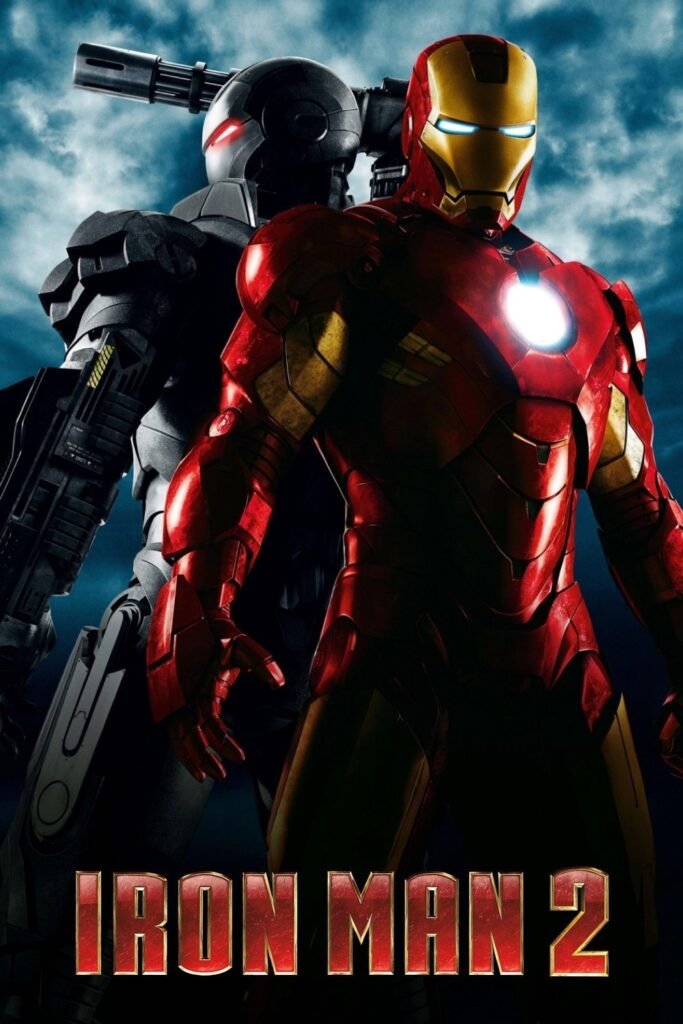
When Jon Favreau returned to direct Iron Man 2 in 2010, fans had massive expectations after the phenomenal success of the first film. The pressure was on to deliver something bigger, bolder, and more explosive while maintaining the charm that made the original so special. Iron Man 2 not only met these expectations but exceeded them in many ways, expanding the Marvel Cinematic Universe just as it was beginning to take shape in ways that would forever change superhero cinema.
The film picks up shortly after the events of the first movie, with Tony Stark (Robert Downey Jr.) having revealed his identity as Iron Man to the world. This revelation comes with consequences as the government demands he hand over his technology. Meanwhile, Stark faces personal challenges as the arc reactor keeping him alive is also poisoning him. This dual conflict—external and internal—drives the narrative forward while allowing Downey Jr. to further develop the character that relaunched his career.
What makes Iron Man 2 particularly compelling is how it balances these multiple storylines without feeling overcrowded. The introduction of new characters like Natasha Romanoff/Black Widow (Scarlett Johansson) and the expansion of supporting roles for Pepper Potts (Gwyneth Paltrow) and James “Rhodey” Rhodes (Don Cheadle, replacing Terrence Howard) add depth to the universe without overshadowing Stark’s journey. These additions feel organic rather than forced, setting up future Marvel films while serving the immediate story.
The villainous side of Iron Man 2 introduces Ivan Vanko/Whiplash (Mickey Rourke), a Russian physicist with a personal vendetta against the Stark family. Rourke brings a menacing presence to the role, creating a villain who’s both physically imposing and intellectually formidable. His rivalry with Stark feels personal and intense, raising the stakes beyond typical superhero conflicts. The addition of Justin Hammer (Sam Rockwell) as a secondary antagonist provides comic relief while also representing the corporate greed that contrasts with Stark’s evolving morality.
From a technical standpoint, Iron Man 2 showcases impressive advancements in visual effects and action sequences. The suit technology is more sophisticated, allowing for more dynamic fight scenes and flight sequences. The Monaco Grand Prix sequence featuring Whiplash’s initial attack remains one of the film’s most thrilling moments, demonstrating how Favreau improved upon the action choreography from the first film. These sequences aren’t just visually impressive—they serve the story by revealing character motivations and advancing the plot.
The emotional core of Iron Man 2 lies in Stark’s relationship with his father, Howard, whose legacy looms large throughout the film. Through flashbacks and discovered messages, we learn more about the Stark family history and the origins of both the arc reactor technology and Tony’s complicated relationship with responsibility. This exploration of father-son dynamics adds depth to what could have been a straightforward superhero sequel, elevating it to something more meaningful.
The chemistry between the cast members remains a strong point, particularly the banter between Stark and Potts, which evolves from playful flirting to genuine partnership. Their relationship feels authentic and provides an emotional anchor amidst the high-tech action and superhero spectacle. Similarly, the friendship between Stark and Rhodes, despite the recasting, maintains its authenticity, with their eventual reconciliation and team-up in the finale providing one of the film’s most satisfying moments.
Iron Man 2 also excels in its world-building, subtly setting up elements that would become crucial to the broader Marvel Cinematic Universe. The introduction of S.H.I.E.L.D. as a more prominent force, the expansion of the Avengers Initiative, and the post-credits scene featuring Thor’s hammer all contribute to a larger narrative tapestry that would unfold in subsequent films. These elements don’t feel like mere setup but rather organic extensions of the story being told.
The production design deserves special mention, with the Stark Expo serving as a visually stunning backdrop that reflects Tony’s ego and vision for the future. This retro-futuristic aesthetic creates a unique visual identity for the film while reinforcing themes of legacy and progress. The attention to detail in the technology design, from the various Iron Man suits to Whiplash’s own harness, demonstrates a commitment to creating a believable world where this advanced technology feels grounded and plausible.
Musically, Iron Man 2 benefits from AC/DC’s iconic soundtrack, which perfectly complements the film’s high-energy tone and Stark’s rock-and-roll personality. The music choices enhance the viewing experience without overwhelming it, creating an audio-visual experience that feels both epic and intimate depending on the scene’s requirements.
Upon release, Iron Man 2 received generally positive reviews from critics and was a box office success, proving that Marvel’s cinematic universe had staying power beyond its initial entry. The film’s ability to balance character development with spectacular action set a template that subsequent Marvel films would follow, contributing to the franchise’s unprecedented success in the years to come.
Looking back, Iron Man 2 represents a crucial moment in superhero cinema—a film that successfully expanded its universe while maintaining the character-focused storytelling that made the original so compelling. It demonstrated that sequels could be more than just retreads of the original, instead building upon established foundations to create something both familiar and new. This approach would become standard practice for the Marvel Cinematic Universe, with Iron Man 2 serving as an early example of how to do it right.
For fans of the character and the broader Marvel universe, Iron Man 2 remains an essential chapter in Tony Stark’s journey—one that bridges the standalone adventure of the first film with the team-up dynamics that would define later entries. Its blend of humor, heart, and high-tech action continues to entertain, making it a worthy successor to the original and a crucial piece of the Marvel puzzle.
Have you rewatched Iron Man 2 recently? How do you think it holds up compared to other films in the Marvel Cinematic Universe?