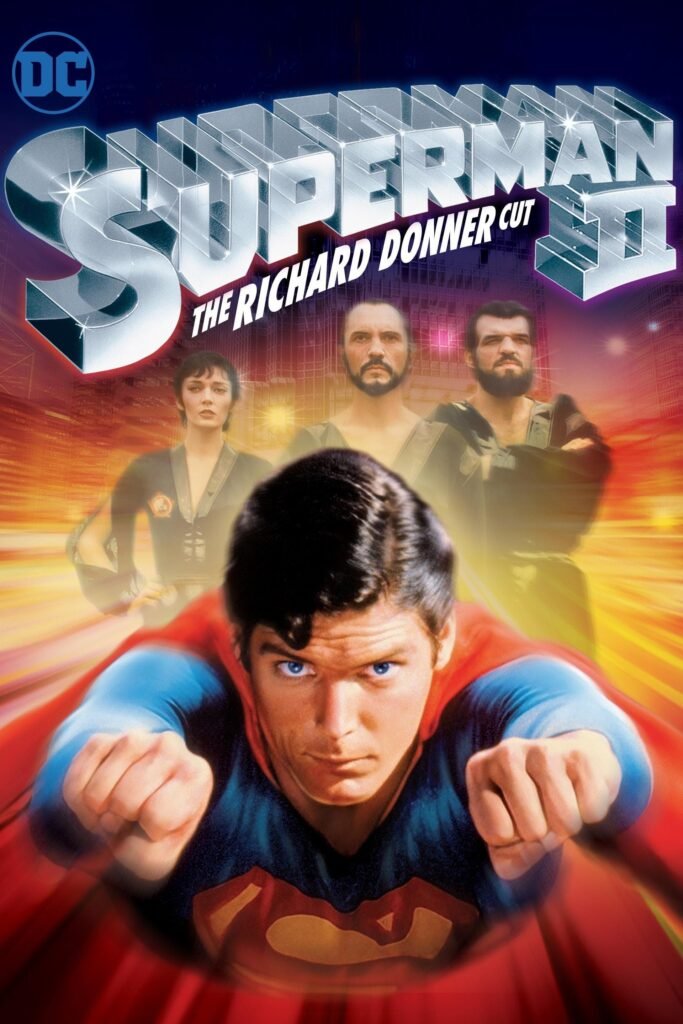
Superman II: The Richard Donner Cut
The version you have never seen.
- Rating
Movie Details
Superman II: The Richard Donner Cut (2006) – The Restored Vision of a Superhero Classic
Superman II: The Richard Donner Cut is a 2006 superhero film directed by Richard Donner, created as an alternative version of the original theatrical release of Superman II. This version restores much of the footage and narrative structure that was originally envisioned during early production, offering a different interpretation of the iconic superhero sequel.
Unlike the theatrical cut, this version focuses more closely on character development, emotional stakes, and the conflict between identity and responsibility. The focus keyword Superman II: The Richard Donner Cut represents a significant revision of superhero cinema history, giving audiences insight into what the film might have been under its original creative direction.
At its core, the film explores sacrifice, love, power, and the burden of heroism.
A Different Version of a Familiar Story
The story of Superman II: The Richard Donner Cut follows the continuation of the superhero’s struggle between his personal life and his responsibility to protect Earth.
Clark Kent, played by Christopher Reeve, faces a major dilemma when he chooses to give up his powers in order to live a normal life with Lois Lane. This decision dramatically shifts the balance of power, leaving Earth vulnerable to threats it can no longer defend against.
Lois Lane, portrayed by Margot Kidder, becomes central to the emotional core of the story. Her relationship with Clark deepens as she begins to suspect the truth behind his identity and the sacrifice he has made.
This version emphasizes emotional consequences more heavily than action spectacle, focusing on the cost of choosing humanity over responsibility.
General Zod and Kryptonian Threat
A major conflict in Superman II: The Richard Donner Cut involves the arrival of Kryptonian criminals led by General Zod, played by Terence Stamp.
Zod and his allies escape imprisonment and arrive on Earth with extraordinary powers, identical to Superman’s abilities. Their arrival creates a global threat as they quickly assert dominance over human authorities and demand control of the planet.
Unlike other villains, Zod represents unchecked power without moral restraint. His presence forces the protagonist to confront what happens when similar abilities are used without responsibility or compassion.
The conflict between Superman and Zod becomes both physical and ideological, representing order versus domination.
The Emotional Core: Identity and Choice
One of the defining aspects of Superman II: The Richard Donner Cut is its focus on identity. Clark Kent’s decision to relinquish his powers highlights the tension between personal happiness and global responsibility.
The film explores what it means to be human, even for someone who is not biologically human. Clark’s desire for a normal life reflects a universal struggle between duty and self-fulfillment.
However, as danger rises, he is forced to reconsider whether he can truly abandon his responsibilities.
This internal conflict is central to the narrative and gives the film a more introspective tone compared to traditional superhero action films.
Lois Lane and Emotional Discovery
Lois Lane plays a crucial role in understanding Clark’s transformation. Throughout Superman II: The Richard Donner Cut, she gradually pieces together the truth about his identity.
Her curiosity and determination lead her to a pivotal moment where she uncovers Clark’s secret, deepening the emotional stakes of their relationship.
Unlike typical superhero romances, their connection is built on vulnerability and truth. Lois represents the human perspective within a world of extraordinary power.
Her emotional reactions help ground the story, making the stakes feel personal rather than purely global.
The Fortress of Solitude and Legacy
The Fortress of Solitude plays a symbolic role in Superman II: The Richard Donner Cut, serving as a place of reflection and transformation.
It is here that Clark confronts his heritage, legacy, and the consequences of his decisions. The Fortress acts as both a sanctuary and a reminder of his responsibilities as the last son of Krypton.
Through its imagery and setting, the film reinforces themes of isolation and destiny, emphasizing the weight of carrying extraordinary power in a fragile world.
Conflict and Sacrifice
As Zod’s forces grow stronger, Clark is forced to make a difficult decision: reclaim his powers and face the consequences of his earlier choice.
This moment becomes the emotional turning point of Superman II: The Richard Donner Cut, where personal desire is ultimately overshadowed by the need to protect others.
The return to action is not just a physical transformation but an emotional acceptance of responsibility.
The battle that follows is not only about defeating enemies but also about reclaiming identity.
Restored Vision and Direction
Director Richard Donner brings a more character-driven approach to this version of the film, focusing on emotional continuity and narrative coherence.
This cut reintroduces scenes and story elements that were not fully utilized in the theatrical release, offering a more unified vision of the story.
The pacing emphasizes character development and moral conflict, rather than relying solely on spectacle.
As a result, Superman II: The Richard Donner Cut feels more reflective and structured, aligning closely with its original creative intent.
Action and Visual Style
The action sequences in Superman II: The Richard Donner Cut maintain a classic superhero tone, emphasizing physical confrontation, flight sequences, and superhuman strength.
However, the visual presentation is more restrained compared to modern superhero films, focusing on practical effects and character-driven moments.
The battles between Superman and Zod highlight contrasting philosophies rather than just physical dominance.
Each encounter reinforces the central theme of responsibility versus tyranny.
Legacy and Cultural Impact
Superman II: The Richard Donner Cut remains an important entry in superhero film history due to its unique production background and restored narrative.
It offers audiences an alternative perspective on a well-known story, highlighting how creative vision can significantly shape storytelling outcomes.
The film also stands as an example of how revisiting original material can provide deeper insight into character motivation and thematic structure.
For fans of superhero cinema, Superman II: The Richard Donner Cut represents a more introspective and emotionally grounded interpretation of heroism, identity, and sacrifice.