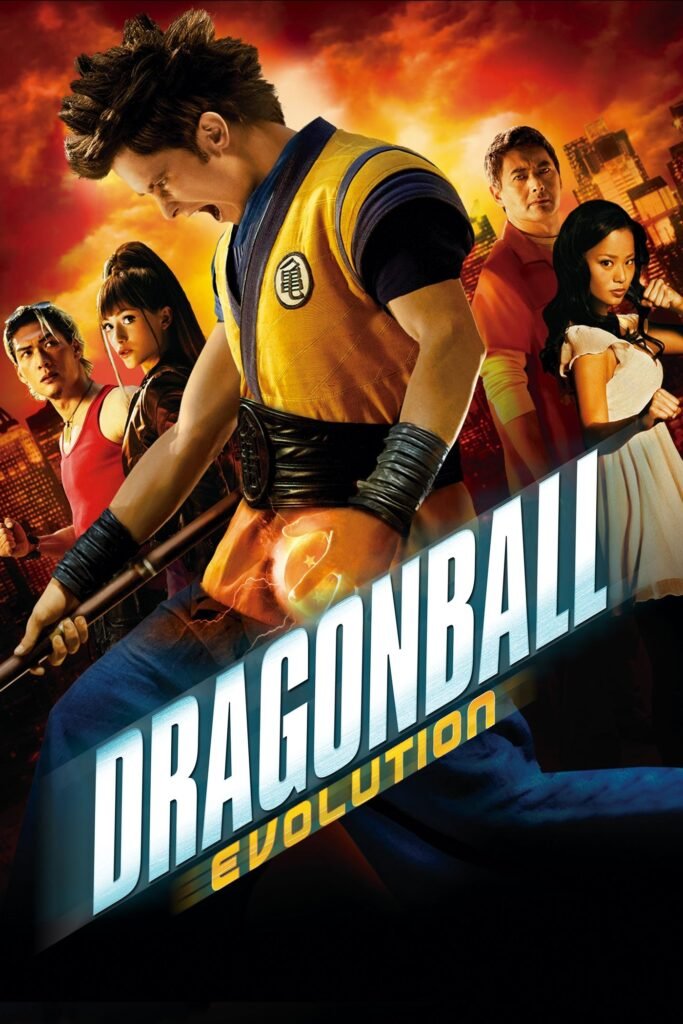
Dragonball Evolution
The legend comes to life.
- Rating
Movie Details
Dragonball Evolution (2009) – A Live-Action Take on Dragon Ball
Dragonball Evolution arrived in 2009 as the first major live-action adaptation of the legendary Dragon Ball franchise. Directed by James Wong, the movie attempted to transform the popular manga and anime series into a Hollywood action adventure aimed at mainstream audiences.
For longtime fans, Dragonball Evolution represented a major moment because Dragon Ball had already become one of the most influential anime franchises in the world. The film introduced iconic characters such as Goku, Bulma, Master Roshi, and Piccolo in a completely live-action format while blending martial arts, fantasy, and supernatural action.
Although the movie generated mixed reactions over the years, it remains a notable chapter in the history of anime adaptations and superhero-inspired cinema.
A Different Interpretation of Goku’s Story
The story of Dragonball Evolution follows Goku, a teenager with mysterious powers who lives under the guidance of his grandfather, Grandpa Gohan. Unlike the anime version, the movie presents Goku in a more grounded high school setting before expanding into larger fantasy elements.
After a tragic attack connected to the villainous Lord Piccolo, Goku begins a journey to locate the legendary Dragon Balls before they can be used for destruction. Along the way, he teams up with Bulma, Master Roshi, Yamcha, and Chi-Chi while learning more about his origins and hidden abilities.
The movie simplifies many elements from the original Dragon Ball mythology in order to fit the story into a shorter runtime. As a result, the film focuses mainly on Goku’s growth, martial arts training, and battle against Piccolo rather than exploring the larger universe from the anime series.
Even with those changes, the core themes of destiny, friendship, and personal growth remain central to the story.
The Cast and Characters
One of the most talked-about aspects of Dragonball Evolution was its cast. Justin Chatwin played Goku, portraying the character as a socially awkward teenager slowly discovering his true potential.
Meanwhile, Emmy Rossum appeared as Bulma, reimagined as a more action-oriented adventurer searching for the Dragon Balls. Chow Yun-fat brought humor and energy to Master Roshi, one of the franchise’s most iconic mentors.
The film’s primary antagonist, Lord Piccolo, was played by James Marsters. His darker interpretation of the character helped establish the movie’s fantasy-action tone and provided a major threat for Goku to overcome.
At the same time, Jamie Chung portrayed Chi-Chi, adding romance and emotional support to Goku’s journey.
While the movie took creative liberties with many characters, the cast attempted to bring recognizable Dragon Ball personalities into a live-action environment.
Action and Martial Arts Style
Action plays a huge role throughout Dragonball Evolution. Since Dragon Ball is known for martial arts battles and energy attacks, the movie focused heavily on fight choreography and supernatural combat abilities.
The combat scenes combine martial arts movements with fantasy-style powers known as “Ki.” Characters can manipulate energy, perform enhanced attacks, and engage in fast-paced action sequences inspired by the anime source material.
Director James Wong approached the action with a lighter and more accessible tone compared to darker comic book movies released during the same period. As a result, the film feels more like a fantasy adventure aimed at younger audiences.
Several scenes also attempt to recreate iconic Dragon Ball elements, including training sequences, energy-based attacks, and the search for mystical artifacts. While simplified for live action, these moments were designed to capture the spirit of the franchise.
The visual effects reflected the late-2000s era of fantasy filmmaking, blending CGI energy attacks with practical martial arts choreography.
Adapting a Legendary Anime Franchise
Adapting Dragon Ball into live action was always going to be challenging. The original manga and anime created by Akira Toriyama feature exaggerated action, colorful worlds, and over-the-top characters that are difficult to recreate realistically.
Because of this, Dragonball Evolution made several major changes to the original material. The setting became more modern and grounded, character backstories were altered, and the tone shifted toward a teen fantasy-action film rather than a direct adaptation of the anime.
These creative decisions divided fans. Some viewers appreciated the attempt to introduce Dragon Ball to a wider audience, while others felt the movie strayed too far from the spirit of the source material.
Even so, the film remains an important example of Hollywood’s early attempts to adapt anime properties for international audiences.
Legacy and Fan Reception
Over time, Dragonball Evolution became one of the most heavily discussed live-action anime adaptations. While reactions were mixed to negative among many longtime Dragon Ball fans, the movie still gained attention because of the franchise’s enormous global popularity.
Interestingly, the response to the film reportedly influenced future Dragon Ball projects. Many fans believe the criticism surrounding the movie encouraged renewed focus on the anime franchise itself, eventually contributing to later animated projects and renewed interest in the series.
Despite its divisive reputation, the movie continues to attract curiosity from viewers exploring anime adaptations and superhero-inspired fantasy films from the 2000s.
For some audiences, Dragonball Evolution serves as a nostalgic action movie from that era. For others, it remains a fascinating example of the challenges involved in translating large-scale anime storytelling into live-action cinema.