Ghost Rider: Spirit of Vengeance
He rides again.
- Rating
Movie Details
Ghost Rider: Spirit of Vengeance is a 2011 supernatural action film directed by Mark Neveldine and Brian Taylor. As a follow-up to the earlier Ghost Rider adaptation, this installment takes a noticeably darker, more chaotic approach to the Marvel anti-hero story. From the very beginning, Ghost Rider: Spirit of Vengeance leans heavily into intense visuals, fast-paced editing, and a grittier tone that sets it apart from typical superhero films of its time.
Produced under the Marvel universe branding and distributed by Sony Pictures, the film continues the story of Johnny Blaze, the cursed motorcycle stuntman bound to a demonic spirit. The production aimed to reinvent the character with a more intense, action-driven style that matched the directors’ signature kinetic filmmaking approach.
Story and Supernatural Setting
The narrative of Ghost Rider: Spirit of Vengeance follows Johnny Blaze as he attempts to live in hiding while struggling with the curse of the Ghost Rider. He is drawn back into conflict when he is approached by a mysterious monk who asks for help protecting a young boy targeted by dark forces.
The child is central to the plot, as he is connected to a demonic entity seeking to manifest in the human world. Johnny’s internal struggle between his human identity and the violent spirit within him becomes a major emotional anchor throughout the story.
As the journey unfolds, the film shifts between Eastern European landscapes, abandoned industrial sites, and surreal supernatural environments. This blend of grounded locations and hellish transformations reinforces the film’s darker interpretation of the Marvel universe.
Production Style and Direction
Directed by Mark Neveldine and Brian Taylor, known for their high-energy filmmaking style, the movie embraces rapid camera movement, unconventional angles, and a deliberately chaotic visual rhythm. Their approach was intended to reflect the instability of Johnny Blaze’s cursed existence.
Unlike traditional superhero films of the early 2010s, Ghost Rider: Spirit of Vengeance focuses less on polished storytelling and more on raw visual intensity. The directors aimed to create a sense of unpredictability, mirroring the uncontrollable power of the Ghost Rider itself.
The film was produced in 2011 and reflects a transitional period for comic book adaptations, where studios were experimenting with darker tones and more stylized action sequences. Sony Pictures played a key role in bringing the project to life, maintaining control of the character rights at the time.
Universe and Character Foundation
Set within the Marvel universe, the film draws from the long-running Ghost Rider comic mythology. Johnny Blaze, the central character, is a stunt motorcyclist who made a pact with a demon, resulting in his transformation into the flaming-skulled vigilante known as Ghost Rider.
While the film remains loosely connected to broader Marvel continuity, it operates largely as a standalone narrative. This allows it to explore a more mythological and horror-inspired tone, rather than integrating heavily with other superhero storylines.
The antagonist forces in the film are rooted in demonic mythology, giving the story a supernatural edge that distinguishes it from more science-based Marvel entries.
Visual Effects and Action Design
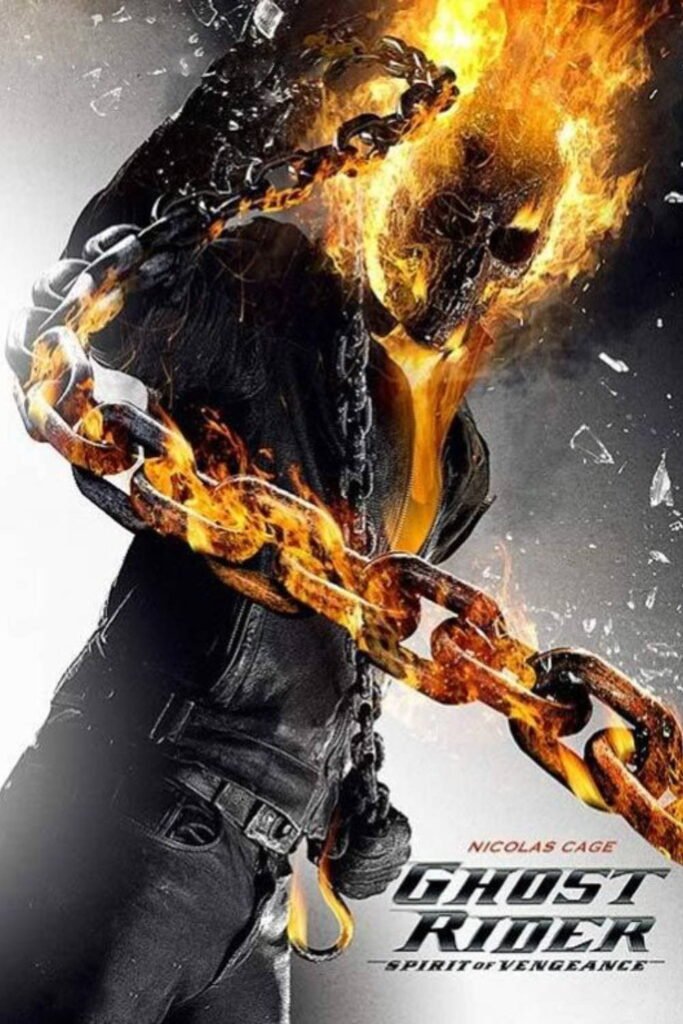
One of the most defining aspects of Ghost Rider: Spirit of Vengeance is its heavy reliance on visual effects. The transformation sequences, particularly Johnny Blaze’s shift into the Ghost Rider, are designed to emphasize fire, bone structure, and supernatural energy.
The action scenes are fast, aggressive, and often exaggerated, featuring motorcycle chases, explosive confrontations, and supernatural combat. The visual style is intentionally unpolished in places, reinforcing the chaotic nature of the character’s curse.
The Ghost Rider himself is portrayed as a fiery skeleton engulfed in supernatural flames, a design that remains one of the most recognizable elements of the franchise.
Release Context and Platforms
Released in 2011, the film arrived during a competitive period for superhero cinema. While major franchises were leaning toward interconnected universes and ensemble storytelling, this film took a more isolated, character-driven approach.
Distributed by Sony Pictures, it was released in multiple international markets and positioned as a darker, more experimental take on Marvel’s supernatural side. The release strategy focused on action audiences and fans of the original Ghost Rider concept, offering a more intense reinterpretation of the character.
Reception and Legacy
Upon release, Ghost Rider: Spirit of Vengeance received mixed reactions from audiences and critics. While some appreciated its bold visual style and Nicolas Cage’s committed performance as Johnny Blaze, others criticized its narrative structure and unconventional tone.
Despite this, the film has developed a cult following over time, particularly among viewers who enjoy stylized, high-energy comic book adaptations. Its experimental direction and extreme visual approach have helped it stand out within the broader landscape of superhero films.