Kick-Ass
Shut up. Kick-ass.
- Rating
Movie Details
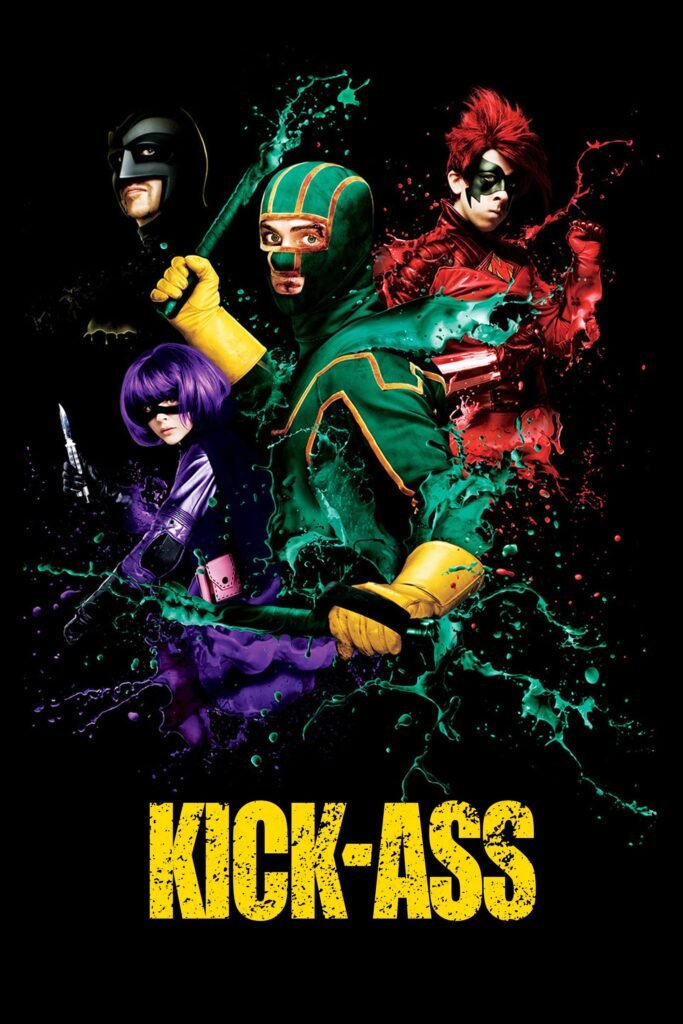
Kick-Ass is a 2010 superhero black comedy film directed by Matthew Vaughn. Based on the comic book series by Mark Millar and John Romita Jr., the film takes a very different approach to the superhero genre. Instead of focusing on gods or billionaires in high-tech suits, Kick-Ass tells the story of an ordinary teenager who decides to become a real-life masked vigilante.
Produced as a British-American collaboration, the film stands out for its raw humor, violent action, and grounded yet exaggerated take on superhero fantasy. From the beginning, Kick-Ass sets out to challenge the idea of what it really means to be a hero.
Story and Urban Setting
The story follows Dave Lizewski, a socially invisible high school student who becomes fascinated with comic books. One day, he asks a simple question: why has no one tried to become a real superhero in real life? This curiosity leads him to design a costume and adopt the identity of Kick-Ass.
Unlike traditional heroes, Kick-Ass has no powers, no training, and no resources. His first attempt at crime-fighting goes disastrously wrong, leaving him injured and humiliated. However, a viral video of his actions unexpectedly turns him into an internet sensation.
As the story progresses, Dave becomes entangled with more experienced vigilantes, including Big Daddy and Hit-Girl, who are far more skilled and dangerous. Their mission against crime boss Frank D’Amico escalates the narrative into a brutal underground war between vigilantes and organized crime.
Direction and Creative Vision
Directed by Matthew Vaughn, Kick-Ass blends stylized violence with grounded emotional storytelling. Vaughn’s direction emphasizes contrast—bright comic-book aesthetics paired with sudden bursts of realism and brutality.
The film deliberately avoids the polished tone of mainstream superhero movies. Instead, it embraces unpredictability, mixing comedy with shockingly intense action sequences. This tonal balance is one of the reasons Kick-Ass became such a standout entry in the superhero genre.
The 2010 release also came at a time when superhero cinema was becoming increasingly dominant. However, Kick-Ass carved its own identity by rejecting traditional hero archetypes and focusing on flawed, relatable characters.
Universe and Comic Book Roots
Kick-Ass exists within a stylized version of the real world rather than a traditional superhero universe. Unlike Marvel or DC continuity-driven narratives, this story operates independently, though it strongly reflects comic book culture.
The characters are grounded in reality but exaggerated through comic book logic. Hit-Girl, for example, represents a hyper-skilled vigilante trained from childhood, while Big Daddy mirrors a darker, obsessive version of Batman-style justice.
This blend of realism and comic exaggeration gives the film its unique identity, making it feel both familiar and completely different from standard superhero stories.
Action Style and Visual Identity
One of the defining elements of Kick-Ass is its highly stylized action. Fight scenes are fast, violent, and often unexpected. The choreography avoids traditional superhero restraint, instead leaning into realism mixed with comic-book exaggeration.
Hit-Girl’s action sequences, in particular, are known for their precision and intensity. These moments contrast sharply with Kick-Ass’s inexperienced fighting style, highlighting his evolution throughout the story.
The cinematography also plays a major role in shaping the film’s tone. Bright colors, dynamic camera movement, and sudden tonal shifts reinforce the chaotic nature of a world where ordinary people try to become superheroes.
Character Development and Themes
At its core, Kick-Ass explores themes of identity, obsession, and the consequences of fantasy meeting reality. Dave’s journey is not about gaining powers or saving the world—it’s about understanding the limits of his own choices.
As Kick-Ass becomes more involved in the vigilante world, he realizes that heroism comes with real danger and consequences. Meanwhile, characters like Hit-Girl and Big Daddy introduce darker themes of revenge and conditioning, challenging the idea of what justice really means.
The film constantly questions whether people should attempt to become heroes in a world that is not designed for them.
Release Context and Reception
Released in 2010, Kick-Ass arrived during a transitional period for superhero cinema. Audiences were already familiar with large-scale franchises, but this film offered something far more subversive.
Its mix of violence, humor, and emotional depth sparked strong reactions from both critics and viewers. While some praised its originality and bold tone, others were surprised by its graphic content and dark storytelling.
Over time, however, Kick-Ass has developed a strong cult following and is often credited with influencing later subversive superhero narratives.
Legacy and Impact
The impact of Kick-Ass extends beyond its initial release. It helped redefine how comic book adaptations could be approached, proving that superhero stories did not need to follow traditional formulas.
Its influence can be seen in later films and series that explore darker, more realistic interpretations of heroism. The character of Hit-Girl, in particular, became one of the most iconic elements of modern comic book cinema.
Today, Kick-Ass remains a standout example of how genre storytelling can be reinvented through bold creative risks.