Alita: Battle Angel
An angel falls. A warrior rises.
- Rating
Movie Details
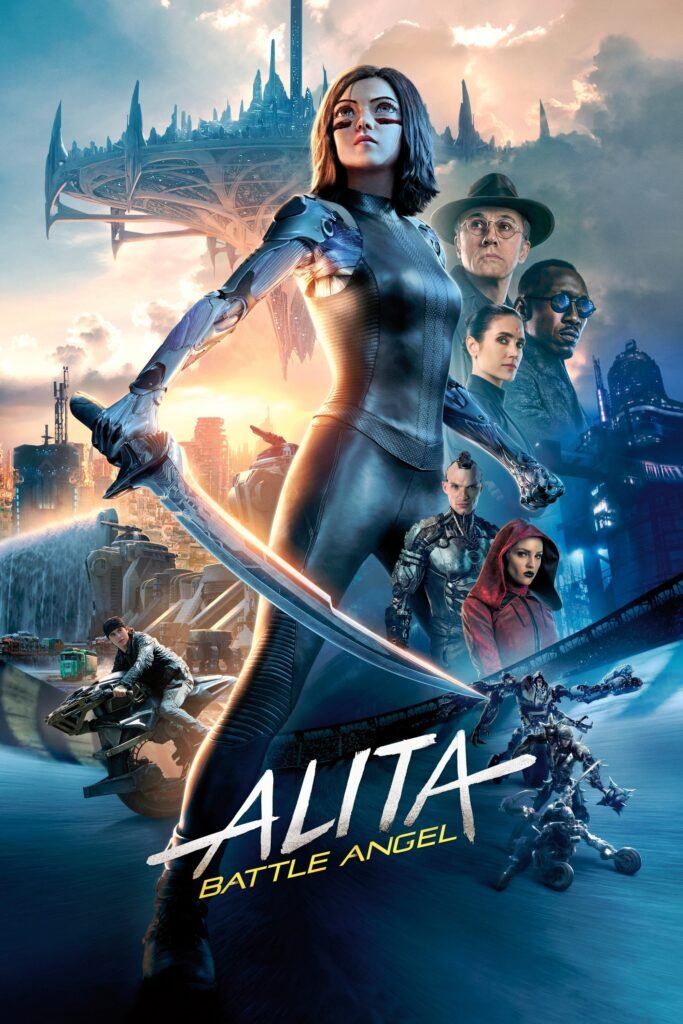
Alita: Battle Angel arrived in 2019 with enormous expectations from science fiction fans, manga readers, and action movie audiences alike. Directed by Robert Rodriguez and produced by James Cameron, the movie blends cyberpunk storytelling, emotional drama, and high-energy action into a visually ambitious adaptation of the classic manga series Battle Angel Alita.
What immediately makes Alita: Battle Angel stand out is its world-building. The film creates a futuristic society that feels both beautiful and dangerous, mixing advanced technology with harsh social inequality. At the center of this world is Alita herself, a cyborg warrior who awakens without memories but slowly discovers she possesses extraordinary combat abilities.
Even years after release, the film continues to attract fans because of its unique visual style, emotional character moments, and exciting action sequences.
A Cyberpunk World Full of Mystery
The story takes place centuries after a devastating war known as the Fall. Humanity now survives in a divided society where the wealthy live in the floating city of Zalem while everyone else struggles below in Iron City. This setting gives the movie a gritty cyberpunk atmosphere that feels heavily inspired by classic dystopian science fiction.
Alita is discovered in a scrapyard by Dr. Dyson Ido, played by Christoph Waltz. After rebuilding her with a cybernetic body, Ido realizes there is something special about the mysterious girl he rescued. Although Alita initially has no memory of her past, flashes of forgotten combat skills quickly reveal she was once connected to powerful military forces.
As Alita begins exploring Iron City, she becomes drawn into dangerous conflicts involving bounty hunters, criminal organizations, and hidden conspiracies tied to Zalem. At the same time, she tries to understand who she truly is and where she came from.
This balance between personal discovery and large-scale action helps the movie feel emotionally grounded despite its futuristic setting. Rather than focusing only on spectacle, the story constantly returns to Alita’s search for identity and purpose.
Stunning Visual Effects and Motion Capture
One of the biggest talking points surrounding Alita: Battle Angel was its groundbreaking visual effects. Alita herself was created using advanced motion-capture technology, with Rosa Salazar providing the character’s performance.
The filmmakers made the bold decision to give Alita oversized anime-inspired eyes while still aiming for realistic facial expressions. Although some viewers initially found the design unusual, many eventually appreciated how expressive and emotional the character became on screen.
The action scenes also showcase the movie’s impressive technical achievements. Whether Alita is battling cyborg enemies in crowded streets or competing in the violent sport of Motorball, the film consistently delivers fast-paced and visually dynamic sequences.
Robert Rodriguez’s direction plays a major role here. Known for energetic filmmaking and stylized action, he manages to combine large-scale CGI environments with emotional close-up moments that keep viewers connected to the characters.
Meanwhile, James Cameron’s influence is visible throughout the movie’s world-building and visual ambition. The combination of Rodriguez’s action-focused style and Cameron’s attention to detail helped create a science fiction film that feels distinct from many modern blockbusters.
Action, Emotion, and Character Growth
While Alita: Battle Angel certainly delivers plenty of action, the emotional side of the story gives the film much of its lasting appeal. Alita begins the movie as an innocent and curious character, but she gradually becomes more confident as she uncovers her hidden abilities and confronts painful truths about her past.
Her relationship with Hugo, played by Keean Johnson, adds another emotional layer to the story. Hugo dreams of escaping Iron City and reaching Zalem, while Alita becomes increasingly determined to protect the people she cares about.
At the same time, several villains create constant tension throughout the movie. Characters like Vector, played by Mahershala Ali, and the deadly cyborg hunter Grewishka present major threats that push Alita to her limits.
The film’s action scenes are especially effective because they often connect directly to Alita’s emotional journey. Each fight helps reveal more about her past while showing how much she has evolved as a character.
Additionally, the movie explores themes of class division, humanity, memory, and self-discovery. These deeper ideas help elevate the film beyond a typical action blockbuster.
Why Alita: Battle Angel Developed a Strong Fanbase
Although Alita: Battle Angel received mixed reactions from some critics during its theatrical release, audiences responded much more positively. Over time, the film developed a passionate fanbase that continues to support the possibility of future sequels.
Many viewers appreciated the movie’s willingness to embrace its manga roots while still adapting the story for mainstream audiences. Unlike some live-action anime adaptations, Alita: Battle Angel respects the emotional tone and visual style of its original source material.
The film’s world also feels much larger than what viewers see on screen. References to past wars, advanced technology, and the mysterious city of Zalem create a sense of depth that encourages audiences to imagine what other stories exist within this universe.
Another reason for the movie’s popularity is Alita herself. She stands out as a compelling science fiction protagonist because she combines vulnerability, determination, kindness, and incredible combat skill. Her character arc gives the story emotional momentum from beginning to end.
Years after its release, discussions surrounding Alita: Battle Angel remain active online, especially among fans hoping to see the story continue. The movie’s combination of cyberpunk aesthetics, emotional storytelling, and ambitious visuals helped it become one of the more memorable science fiction films of the late 2010s.